Roof types on commercial buildings
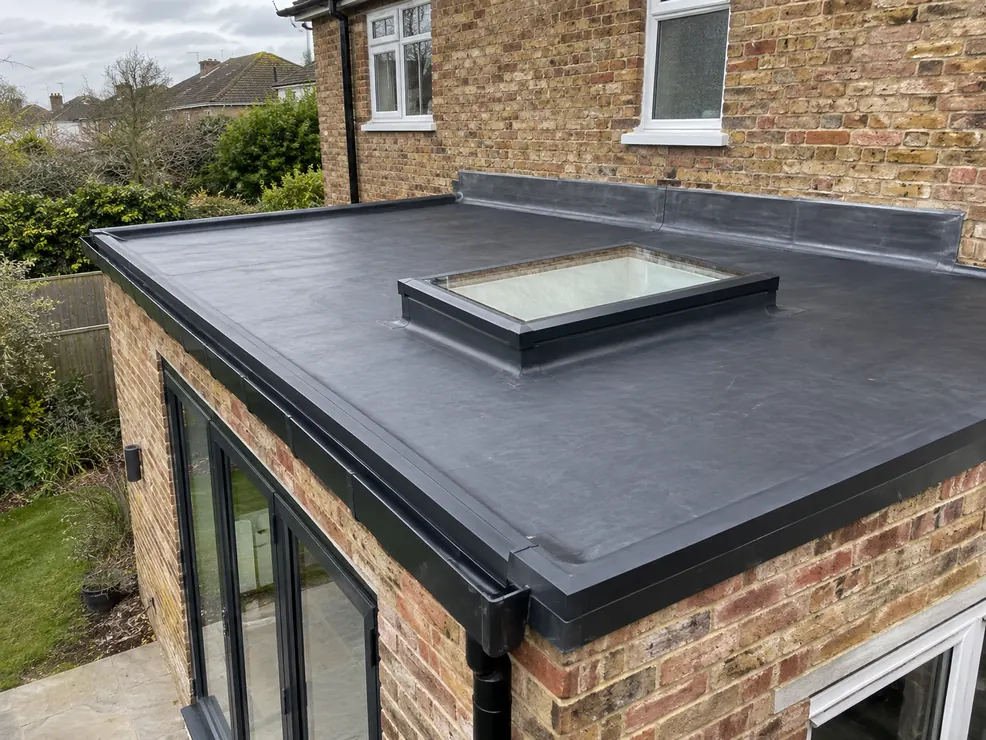
Shops, offices and smaller commercial units frequently have large areas of flat roof, built up in much the same way as a domestic extension but on a bigger scale, which raises the stakes if the falls or detailing are wrong. Industrial and warehouse buildings more often use profiled metal sheeting on a pitched or low-pitched structure, designed to shed water quickly across a wide span.
Mixed-use and older commercial properties sometimes combine several roof types on the same building, which can make maintenance and leak-tracing more involved than on a single, uniform roof.
Common issues on commercial roofs
Large flat areas are prone to ponding where falls are inadequate or have settled unevenly over time, and plant equipment, rooflights and ductwork penetrating the roof all create extra junctions where leaks can start. Metal sheeting can suffer from loose or corroded fixings, split sealant at overlaps, and damage around rooflights or ridge lines.
Because commercial roofs are often larger and harder to access than a domestic one, minor issues can go unnoticed for longer, which is one reason regular visual checks from the ground or via photographs can help catch problems early.
Maintenance and access considerations
Working on a commercial roof usually involves more planning than a domestic job, including access equipment, consideration of business operating hours, and sometimes coordination with other trades or tenants in the building. A clear scope of work, agreed before anything starts, helps avoid surprises partway through.
Our flat roofing page covers the general principles that apply to flat roof construction and maintenance, much of which carries across to commercial buildings at a larger scale, while our roof repairs page sets out how repairs are typically approached.
Rooflights and sheets may be fragile, so building occupants should not attempt a closer inspection by walking onto the roof. Establish who controls access and manages the premises, and discuss the arrangements for protecting people below. Commercial work needs an agreed safety plan appropriate to the building, not an assumed domestic access arrangement.
Getting commercial roof work assessed
Because commercial roofs vary so widely in construction, size and condition, a proper assessment is the right starting point rather than assuming one approach suits every building. This should cover the roof covering itself, the structure beneath it, drainage, and any penetrations or plant that sit on the roof.
It also helps to keep a simple record of past repairs and known problem areas, since this history can speed up an assessment and point an inspector towards the parts of the roof most likely to need attention. If you manage or own a commercial property and want to discuss a roofing issue, get in touch with details of the building and what you have noticed, and we can advise on whether the work is something we can assist with.
Frequently asked questions
What roof types are used on commercial buildings?
Shops and offices often have large flat roof areas, while industrial and warehouse buildings more commonly use profiled metal sheeting, though many commercial properties combine more than one roof type.
How often should a commercial roof be checked?
Regular visual checks, particularly after storms, help catch issues such as blocked outlets or lifted sheeting before they develop into larger leaks, though frequency depends on the roof type and building use.
Do commercial roof repairs disrupt the business below?
Where possible, work is planned around operating hours and access needs, though the extent of disruption depends on the scale of the job and the layout of the building.
What details help assess a commercial roof project?
Describe the building use, roof type, visible defects and access restrictions. Include the address and any requirements for keeping entrances or working areas open so the proposed work can be assessed against the premises.
Ask for a written quote
Call 07508 571291 (Mon–Fri 7:30am–6:00pm, Sat 8:00am–12:00pm) or send your details through our contact page.