What a roof valley is
Wherever a roof changes direction inwards, such as where a rear wing joins the main house or a dormer meets the slope, a valley forms. Water from both slopes runs into it and down to the gutter. Valleys are usually lined with lead or formed with mortar, and on some roofs with purpose-made valley tiles or slates cut to meet in the middle.
Whichever type you have, the valley does more work than any other part of the roof, which is why it deserves a careful look.
Why valleys leak
Debris is the most common culprit. Leaves, moss and silt collect in the channel, slow the water down and push it sideways under the slates or tiles on either side. In heavy rain, a blocked valley can overflow altogether.
Lead valleys can split when the lead has been laid in lengths that are too long or fixed too tightly to move with temperature changes. Old lead can also wear thin. Mortar valleys crack as they age and as the roof moves, opening gaps that let water through. Slipped slates or tiles along the edges of a valley make matters worse.
How a valley leak shows indoors
A valley leak often appears as a damp patch on a ceiling or wall below the point where two roofs join, sometimes some distance from the valley itself as water tracks along timber. Staining on rafters in the loft directly under the valley is a strong clue. Leaks that only show in heavy or wind-driven rain are typical of a partly blocked valley or a small split.
If you are not sure where water is coming from, our roof leak guide explains the common sources and how to narrow them down safely.
Repair or reline
Some valley faults can be repaired in place. A blocked valley is cleared, slipped slates or tiles alongside it are refixed, and small defects in a mortar valley are made good.
Where lead has split in several places, worn thin, or was laid badly in the first place, patching rarely lasts. The better repair is to lift the slates or tiles along each side, take out the old lining, check the boards beneath and reline the valley in sensible lengths with proper laps, before relaying the covering. A cracked mortar valley that keeps failing may also be better relined. We will explain which your roof needs.
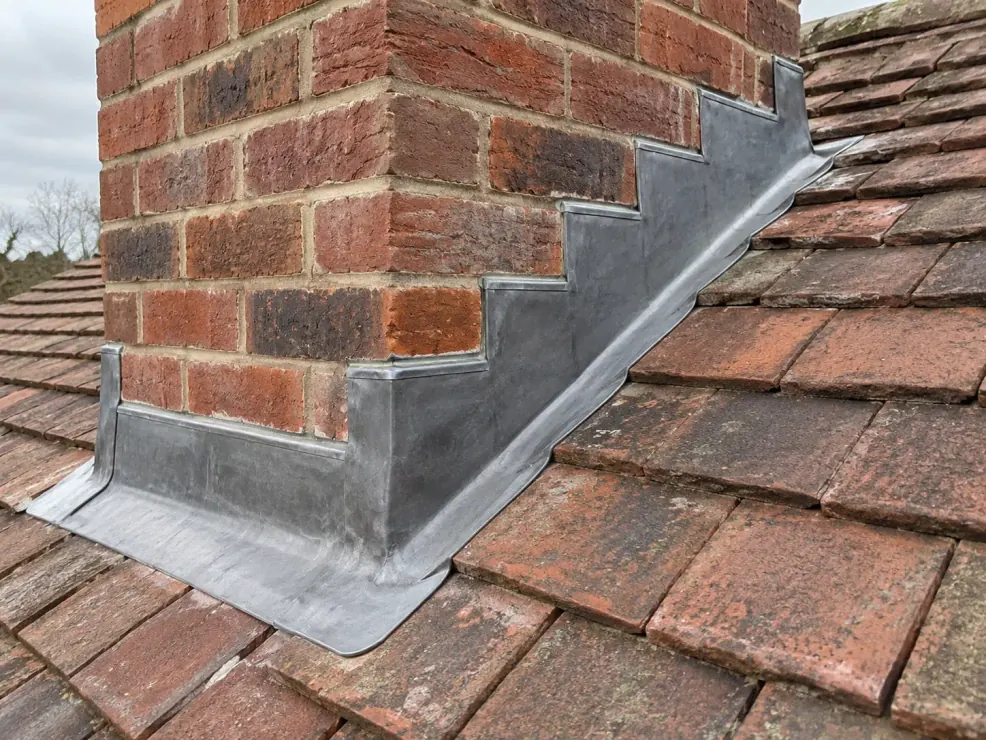
Lead work at valleys sits alongside the flashings we fit at chimneys and walls; our page on chimney repairs and lead work explains that side of the trade.
Valleys on slate versus tiled roofs
On slate roofs, the slates are cut to follow the line of the valley and overlap onto the lead lining, leaving an open channel in the middle for water to run down. The cutting has to be neat and the fixings sound, as the edge slates take a lot of water.
Tiled roofs may have a lead or mortar valley, or a valley formed with special tiles. Interlocking tiles need to be cut and bedded carefully at the valley edges. In each case, the repair follows the type of valley already on the roof unless there is a good reason to change it.
Keeping valleys clear
If trees overhang your roof, valleys can fill with leaves every autumn. Keeping them clear is one of the simplest ways to prevent leaks, but it means working at height, so it is a job for someone with proper access. Clearing is easily combined with other roof work when we are already on site.
Valley repairs are part of our wider roof repairs service, and our guide to roof repair cost explains what affects the price. Rowan Roofing is family-run from Cardenden, Fife. We survey first and put our advice in a written quote. Call 07508 571291 to arrange a visit.
Frequently asked questions
Why is water coming through where two roof slopes meet?
That junction is the valley. Leaks there usually come from a blocked channel, split or worn lead, cracked mortar, or slipped slates or tiles along its edges.
Can a lead valley be repaired or must it be replaced?
A small, isolated defect can sometimes be repaired. If the lead is split in several places, worn thin or badly laid, relining the valley is the lasting fix.
What is a mortar valley?
A valley where the channel is formed with mortar between the slates or tiles of the two slopes, instead of a lead lining. It can crack as it ages and the roof moves.
How often should roof valleys be cleared?
It depends on nearby trees. Roofs under or near trees may need their valleys cleared each year, usually after the leaves have fallen.
Can valley work be done at the same time as other repairs?
Yes, and it often makes sense, because access is already in place. We can combine valley work with slate, ridge, chimney or gutter repairs.