
Need this sorted?
Need help with velux roof window work? Get a quote from Rowan Roofing.
Identify where moisture first appears
Look from inside for the earliest wet area: the glass, opening sash, frame corners or plasterboard lining. Water on the room-facing glass suggests a different investigation from staining above the opening. A wet lower corner can be the end of a route from higher up, so it does not establish which component has failed.
Record whether the window was open, on its ventilation setting or fully closed. Photograph fresh marks and note the rain direction. Keep observations separate from assumptions; a stain beside the frame does not prove that the window itself is defective.
Why the flashing kit matters
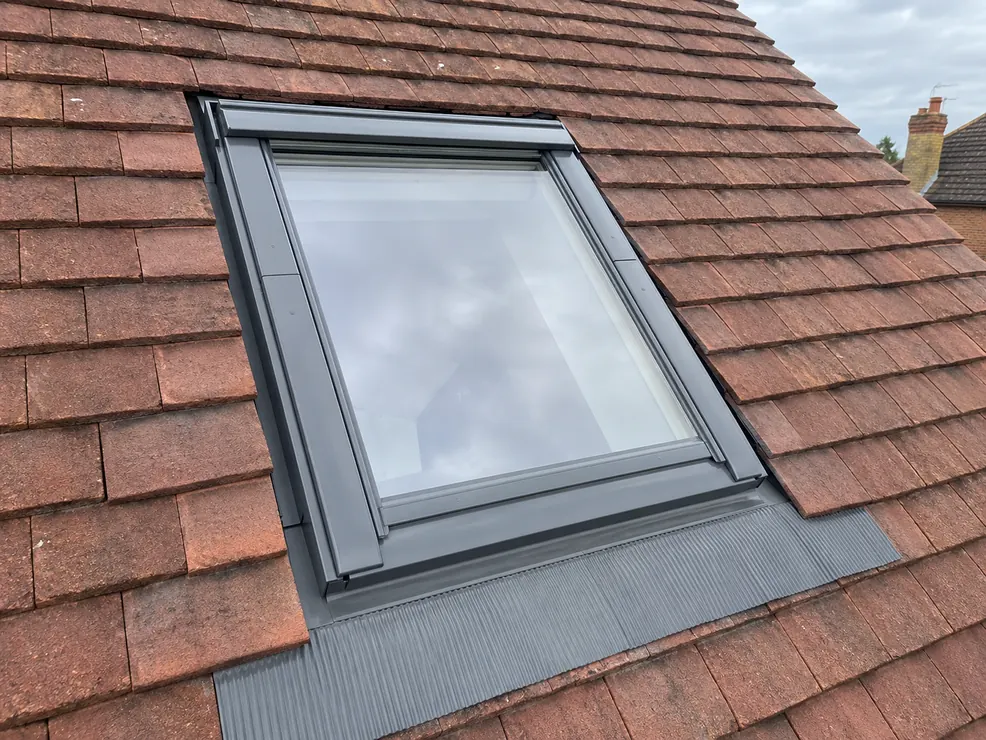
The flashing kit connects the roof window to the surrounding roof covering and directs rain around the opening. Its suitability depends on the window model, roof pitch, installation position and whether the covering is slate, tile or another compatible material. A kit that looks similar is not necessarily interchangeable.
Inspection should consider the upper drainage detail, side channels and lower apron, together with nearby roof coverings. Displaced tiles, distorted flashing or incorrect overlaps can interrupt the intended water route. Smearing sealant around visible edges may conceal these faults without correcting them.
Opening seals, closure and glazing
Seals around the opening sash need consistent contact when the window closes. Dirt, damage, distortion or a closing mechanism that does not engage properly can leave a route for wind-driven water. The frame condition and sash alignment matter as much as the visible rubber.
Moisture between the panes usually indicates a problem with the sealed glazing unit, rather than rain entering around the roof opening. That distinction matters because glazing replacement, seal work and external flashing repairs address different faults. Avoid forcing a stiff handle or adding strips that prevent correct closure.
Velux roof window work
- Window condition and surrounding flashing are considered together.
- The proposed repair or replacement should be described in the quotation.
Drain channels and trapped debris
Roof windows rely on clear routes for water to pass around them. Leaves, moss and fragments from the surrounding roof can collect beside the window or obstruct drainage above it. During sustained rainfall, water may then back up into places that normally remain relatively dry.
External clearance needs suitable access and care around the flashing. Do not lean out, stand on the roof or push tools beneath metal edges. Indoors, keep accessible surfaces clean according to the window instructions, but leave concealed channels and roof-level debris to an appropriately equipped inspection.
Condensation or a rainwater leak?
Condensation forms when moist indoor air meets a cold surface. Droplets across the room-facing glass, particularly after bathing, cooking or overnight cooling, can run down and wet the lower frame. Rainwater entry is more likely when fresh wetting follows rainfall and begins at a particular junction, although both problems can occur together.
Note whether moisture also appears during dry weather and whether other cold surfaces are affected. Ventilation, indoor humidity and insulation around the opening all deserve consideration. Our condensation in the loft guide explains the wider moisture conditions that can confuse a leak diagnosis.
What a targeted repair should address
A useful repair proposal identifies the failed detail and explains how the work restores its function. Depending on the findings, that could involve compatible seals, adjustment, drainage clearance or correction of the flashing and adjacent roof covering. The internal lining may need attention after the source has been resolved and the materials have dried.
Ask whether the surrounding underlay and insulation need checking where staining suggests concealed wetting. The Velux roof windows page is the relevant service starting point. Repairing decoration alone leaves the moisture route unresolved and makes recurrence harder to assess.
When replacement is the wiser choice
Replacement deserves consideration where the frame is substantially deteriorated, the sash no longer fits reliably or several components are failing together. Availability of compatible parts also matters. A sound window with an isolated flashing fault is a different proposition from a distorted frame with damaged glazing and repeated water entry.
Compare the complete repair scope with a suitable replacement, including flashing, access and internal making good. Replacing the window will not automatically correct an unrelated roof defect. Our Velux window replacement cost guide explains the specification choices without treating every opening as the same job.
Need it sorted? Book a Velux roof window repair
Frequently asked questions
Can water enter a Velux window when it is shut?
Yes. Closing the sash does not compensate for damaged seals, poor alignment, restricted drainage or defective flashing. Note where water first appears so the inspection can distinguish the opening mechanism from the surrounding roof junction.
Does mist between the panes explain water on the plaster?
Not usually by itself. Misting between panes points towards the glazing unit, while wet plaster may involve another moisture route. Both symptoms should be recorded rather than assumed to have the same cause.
Should I put silicone around a leaking frame?
Avoid applying sealant without identifying the fault. It can obstruct drainage, interfere with components and hide the condition of the flashing. The appropriate repair depends on which part is failing and how it should shed water.
Is the window identification plate useful?
Yes. The model and size information helps identify compatible parts and replacement options. Photograph the plate only if it is safely accessible, and include that image with photographs of the window and internal staining.
Related services
Covering Edinburgh, Perth and Dundee.