
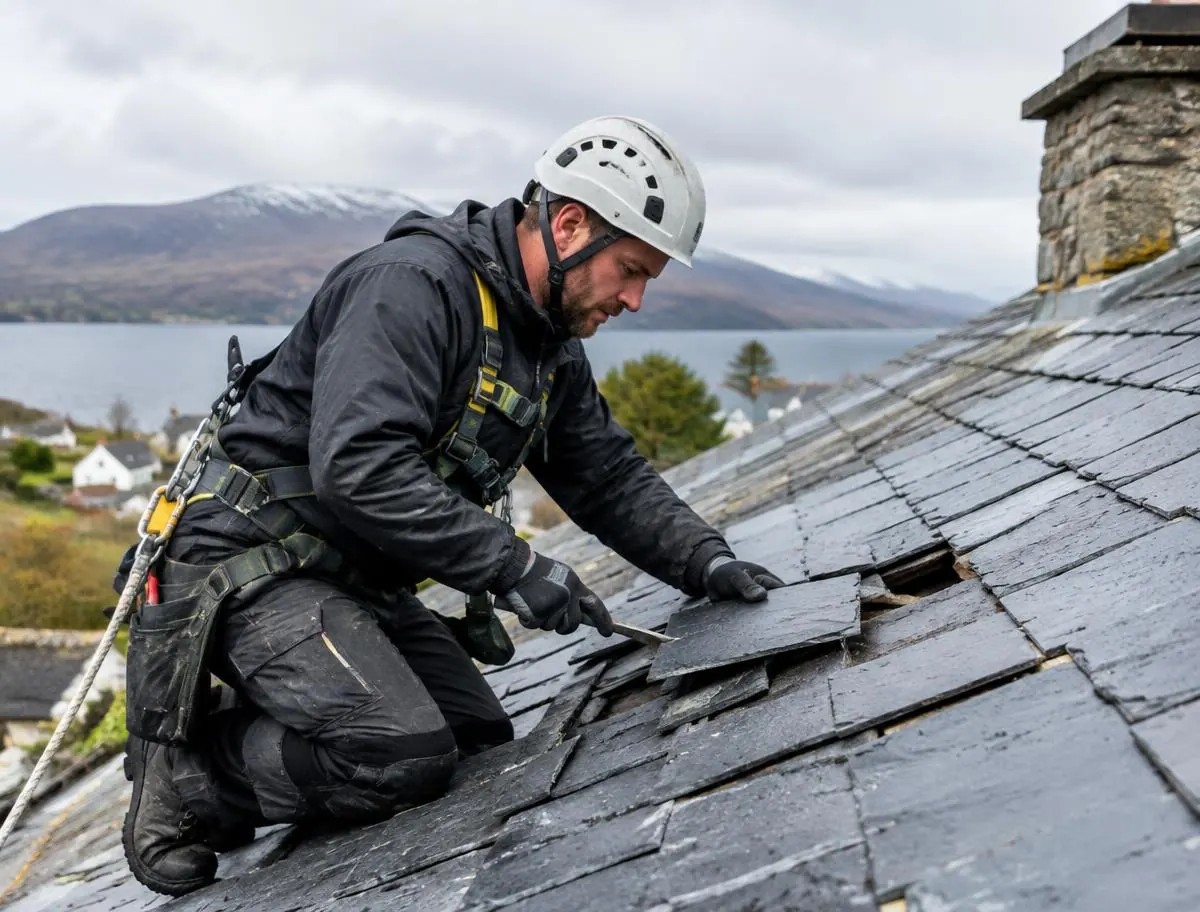
Need this sorted?
Need help with storm damage repairs? Get a quote from Rowan Roofing.
Storm damage versus wear and tear
Buildings insurance commonly distinguishes insured events from maintenance and gradual deterioration. Lifted coverings after severe winds may raise a different question from worn fixings or longstanding failed flashings. Rain arriving during a storm does not automatically make every resulting roof problem storm damage.
There can be several contributing causes. An older roof may have pre-existing defects alongside fresh damage, and the insurer may consider both. Describe what happened accurately rather than choosing a cause before inspection. The storm-damaged roof guide covers practical signs to investigate safely.
Read the policy and check the excess
Check the buildings policy, schedule and claims instructions. Look for the relevant insured events, exclusions, excess and any requirements about notification or emergency work. Cover for internal water damage and cover for repairing the roof itself may be considered under different terms.
The excess is the amount you may have to contribute to an accepted claim. Check the applicable excess rather than assuming every section uses the same one. Ask the insurer how it applies and what information is needed before committing to non-urgent work.
Make the area safe first
Keep people away from loose materials, unstable ceilings and affected electrics. Move possessions only where safe, and contain drips without placing yourself beneath bulging plaster or near electrical equipment. Do not climb onto the roof or use a ladder in bad weather to gather evidence.
If there is an immediate danger, contact the appropriate emergency service or utility provider. For urgent roofing problems, emergency roof repairs explains how to get in touch. Safety takes priority over obtaining a particular photograph or waiting for a claims decision.
Storm damage repairs
- Photographs should be taken only from a safe position.
- For urgent damage, contact the firm during its stated opening hours.
Photographs and a clear timeline
Take photographs from the ground or another safe position, showing the wider roof and visible damage. Record internal stains, damaged belongings and the dates when problems appeared. Keep original images where possible, along with any earlier photographs showing the roof's condition.
Write down what you observed, including the timing of severe weather and any immediate changes. Separate observations from assumptions: a missing tile is visible evidence, while its cause may need assessment. Keep correspondence, invoices and the claim reference together so the sequence remains clear.
Temporary repairs and preventing further damage
Policies commonly expect reasonable steps to limit further loss, but the instructions and circumstances matter. Contact the insurer promptly and ask what emergency measures can proceed, what evidence to retain and whether approval is needed before permanent work.
Temporary weatherproofing should be assessed and carried out safely by someone competent, using methods suitable for the roof. Keep photographs and receipts, and record why urgent action was necessary. Do not assume that emergency expenditure will automatically be reimbursed or that a temporary covering is a permanent repair.
Written quotes and condition reports
If a written quote or report is provided, check that it clearly distinguishes observed defects, proposed repairs and any limitations of the inspection. Photographs and a description of affected areas can help explain the scope. An estimate for replacement should not be treated as proof that replacement is insured.
Ask the insurer what documentation it requires before commissioning additional reporting. A quotation, contractor's opinion and insurer's assessment serve different purposes. Accurate evidence is more useful than wording designed to support a predetermined outcome: describe visible damage and let the insurer assess the policy.
Agree the permanent work and keep records
Clarify whether the insurer wants to inspect, appoint a contractor or approve a quotation before permanent repairs start. If urgent work cannot wait, document the reasons and keep the insurer informed. Distinguish necessary reinstatement from optional improvements or unrelated maintenance.
Keep the agreed scope, authorisation, invoices and any completion information with the claim papers. If the decision is unclear, ask for the reasons and relevant policy wording in writing. Use the insurer's complaints process if needed, then consider the Financial Ombudsman Service where the complaint is eligible.
Need it sorted? Book storm damage repairs
Frequently asked questions
Is roof damage covered by insurance?
It may be covered where the cause falls within the policy and its conditions are met. Storm damage, gradual wear and maintenance issues can be treated differently. Only the insurer can confirm its claim decision against the actual policy and evidence.
Should I contact the insurer before arranging roof repairs?
Contact it promptly and follow the claims instructions, especially before permanent work. Immediate safety measures may still be necessary. Ask what emergency work can proceed and retain evidence, receipts and a record of why action could not wait.
What photographs help with a roof insurance claim?
Safe images showing the wider roof, visible damage and affected internal areas are useful. Include dates and retain earlier condition photographs if available. Never climb onto a damaged roof or take risks to obtain close-up evidence.
Does a roofing quote prove that the insurer must pay?
No. A quote describes proposed work and its cost; it does not establish policy cover. The insurer may request further evidence or its own assessment before deciding which parts of the claim, if any, are covered.
Related services
Covering Edinburgh, Perth and Dundee.