How moss affects a roof
Moss holds moisture against the surface and can build up around tile edges, laps and drainage channels. Detached clumps may slide into gutters or collect around outlets, restricting rainwater disposal. On coverings already weakened by weathering, persistent dampness and freezing conditions can contribute to further deterioration.
Growth alone does not establish that a roof needs replacing. A small amount on sound material may be less concerning than blocked drainage or damaged fixings. The practical question is whether moss is interfering with water flow or concealing defects.
Assessing slates and tiles before cleaning
The covering should be checked for cracking, delamination, loose units and previous repairs before a cleaning method is chosen. Natural slate, concrete tiles and clay tiles do not respond identically to scraping, brushing or water pressure. Surface coatings and manufacturer guidance also affect what is appropriate.
Fragile areas may need repair before any removal begins. For background on the different coverings, see tiled roofs and slate roof repairs. Walking directly across a vulnerable roof can cause more harm than leaving limited moss temporarily in place.
Careful removal versus pressure washing
Controlled manual removal with tools suited to the roof profile can limit disturbance, although aggressive scraping can still damage surfaces or dislodge material. Work should follow the covering's condition rather than pursue a perfectly uniform appearance. Debris needs collecting instead of being pushed into laps and gutters.
Pressure washing is not a default solution. Depending on the material and technique, it can erode surfaces, disturb weathered coverings or drive water beneath overlaps. A roof should not be assumed suitable simply because washing produces an immediate visual improvement.
Treatments and realistic expectations
Where a treatment is proposed, its suitability for the roof material and surrounding environment needs checking. Product instructions, application conditions and precautions for runoff matter, particularly near gardens, watercourses and rainwater collection systems. Chemical treatment is not appropriate for every roof.
Removing growth does not reverse frost damage, repair a cracked tile or restore an eroded surface. Nor does treatment guarantee that moss will never return. Shade, nearby trees, roof orientation and local moisture conditions continue to influence regrowth after the initial cleaning.
Gutters, access and protection below
A removal plan should include safe access and protection for conservatories, lower roofs, paths and planting beneath the work area. Moss can become slippery when disturbed, and a domestic ladder does not provide a suitable working platform for every roof. Fragile sheets and rooflights require particular caution.
Gutters and outlets need clearing during or after removal so loosened material does not create a fresh blockage. The gutter cleaning page explains why clear channels and functioning downpipes are important to the roof's overall drainage.
Checks after the moss is removed
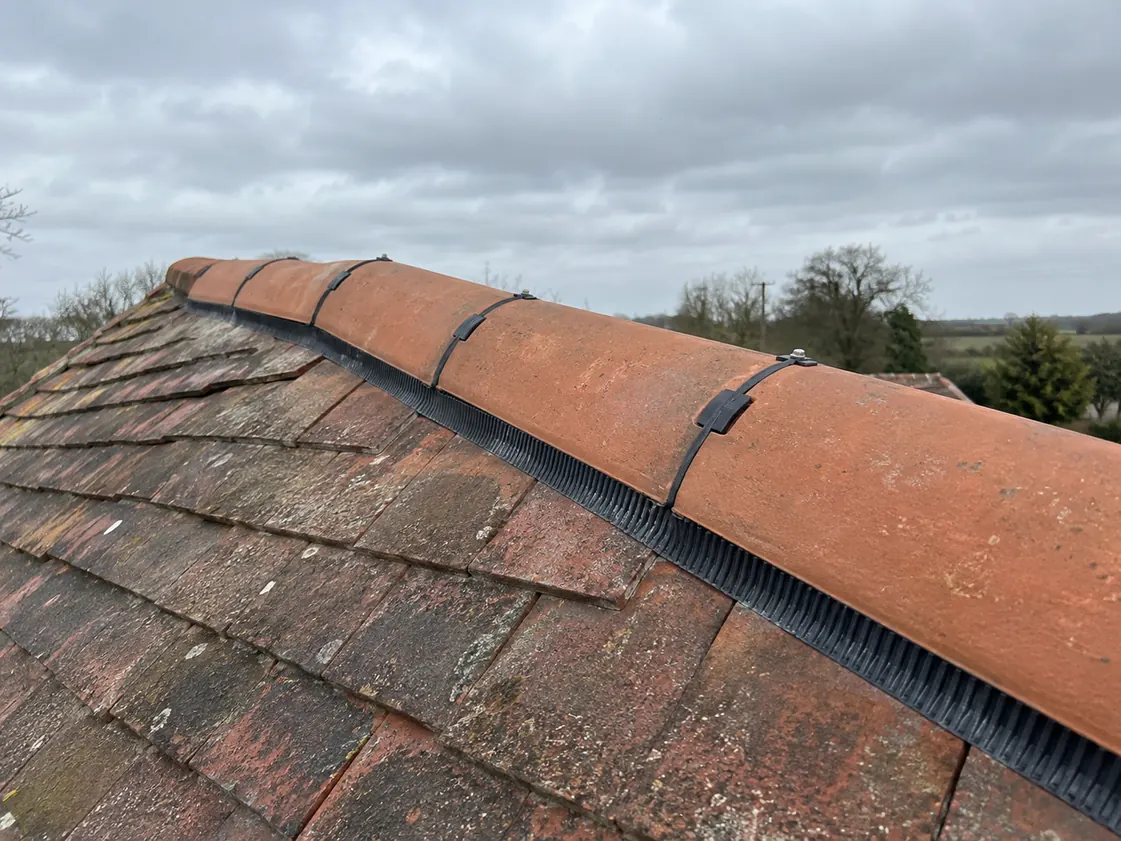
Once the covering is visible, an aftercheck should look for cracked tiles, slipped slates, exposed fixings and disturbed ridge or verge details. Previously hidden defects may become apparent without having been caused by the cleaning itself. Photographs help distinguish the original condition from anything requiring attention afterwards.
Rainwater routes should also be checked for remaining debris and poorly draining sections. Where the roof's condition remains uncertain, roof inspections provide a more useful next step than repeating cosmetic cleaning. Any necessary repairs should be described separately from moss removal.
Roof Moss Removal questions
Does moss mean a roof is beyond repair?
No. Moss can grow on otherwise serviceable coverings. Replacement decisions should be based on the condition of the slates or tiles, fixings, underlay and supporting structure, rather than appearance alone.
Is pressure washing suitable for every tiled roof?
No. Tile type, age, surface condition and manufacturer guidance all matter. High pressure can damage weathered surfaces and force water into vulnerable details, so suitability needs assessing before cleaning.
Should gutters be cleared after moss removal?
Yes. Loose growth and sediment can obstruct gutters, outlets and downpipes. Clearing and checking these routes is an important part of preventing the cleaning work from causing drainage problems.
Can roof moss grow back after treatment?
Yes. Treatment does not remove the environmental conditions that encourage growth. Shade, dampness and nearby vegetation can support its return, so maintenance needs vary between properties.
Ask for a written quote
Call 07508 571291 (Mon–Fri 7:30am–6:00pm, Sat 8:00am–12:00pm) or send your details through our contact page.