What is uPVC cladding?
uPVC, or unplasticised polyvinyl chloride, is a rigid plastic used to produce boards and sheets that interlock or overlap to form a continuous, weather-resistant surface. Unlike timber, it does not need periodic painting or staining, and it is generally more resistant to rot, warping and insect damage over time.
It is available in a range of colours and board profiles, including smooth, woodgrain and shiplap finishes, which allows it to be matched reasonably closely to the style of a property. Fixings and trims are also supplied in matching colours, so joints and edges can be finished neatly rather than standing out against the main boards.
Where cladding is commonly used
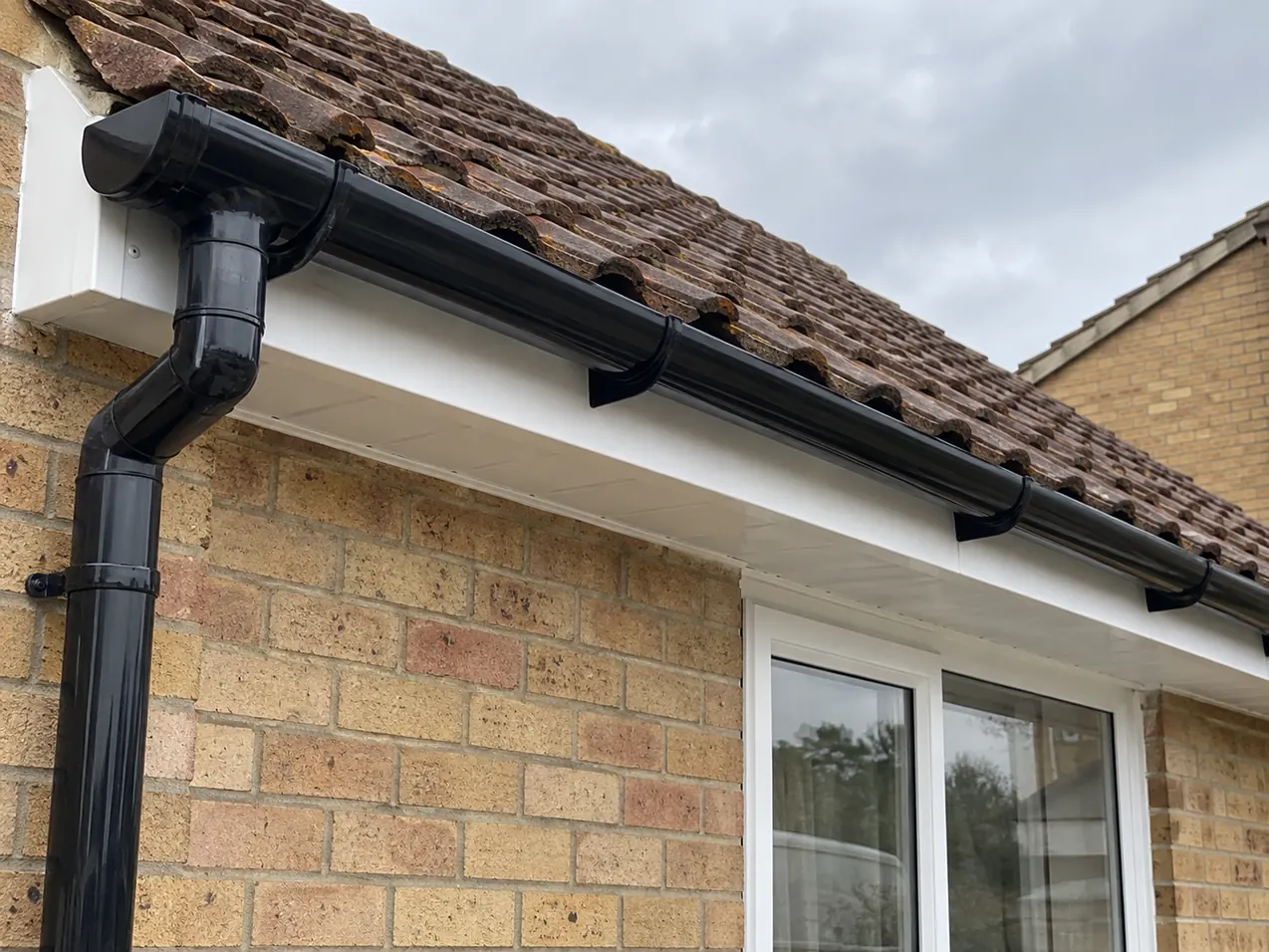
The most common domestic use is covering gable ends, dormer cheeks and sections of external wall that are otherwise finished in timber, particularly where that timber has become difficult to maintain over time. It is also used alongside fascias and soffits as part of a wider roofline refresh, since the same low-maintenance logic applies to all three elements.
Cladding can be fitted as a standalone project or combined with roofline and guttering work, since access equipment and preparation often overlap between the two.
uPVC cladding compared with timber
Timber cladding has a traditional appearance that some properties, particularly period or conservation-sensitive ones, are better suited to, but it requires ongoing maintenance such as painting and repairs to stay weathertight and looking presentable over the years. uPVC trades some of that traditional character for a finish that holds its appearance with comparatively little upkeep.
Whether uPVC is appropriate for a particular property can depend on planning considerations, conservation status, and simple preference, so it is worth weighing these factors before deciding rather than assuming one material suits every building.
Cladding also needs appropriate moisture management and movement allowances; covering damp timber can conceal rather than resolve deterioration. Ask the local council about Scottish planning and building standards requirements, including fire safety, for the specific building. The proposed board system and wall position matter, so product appearance alone is not sufficient to establish suitability.
Cladding alongside guttering and roofline work
Because cladding, fascias, soffits and guttering all sit at the same part of the building, it often makes sense to consider them together rather than in isolation, particularly if scaffolding or access towers are already needed for one job. Worn guttering behind old timber cladding, for instance, can be addressed at the same time as the cladding itself.
If your guttering needs attention as well, our gutter replacement page covers the signs that gutters have reached the end of their useful life. For questions about whether cladding suits your property, get in touch with some photographs and details of the area involved.
Frequently asked questions
What is uPVC cladding used for?
It is most often used to cover gable ends, dormer cheeks or sections of external wall that would otherwise be finished in timber, giving a weatherproof surface that needs little ongoing maintenance.
Does uPVC cladding need painting?
No, one of the main reasons it is chosen over timber is that it does not need repainting or staining, though it can be cleaned periodically to keep its appearance fresh.
Can uPVC cladding be fitted on any property?
It suits many properties, but conservation status, planning restrictions or the style of a period building can mean it is not always appropriate, so this should be checked before deciding.
Is cladding usually combined with other roofline work?
It often is, since cladding, fascias, soffits and guttering sit in the same area of the building and access equipment can be shared across the jobs.
Ask for a written quote
Call 07508 571291 (Mon–Fri 7:30am–6:00pm, Sat 8:00am–12:00pm) or send your details through our contact page.