
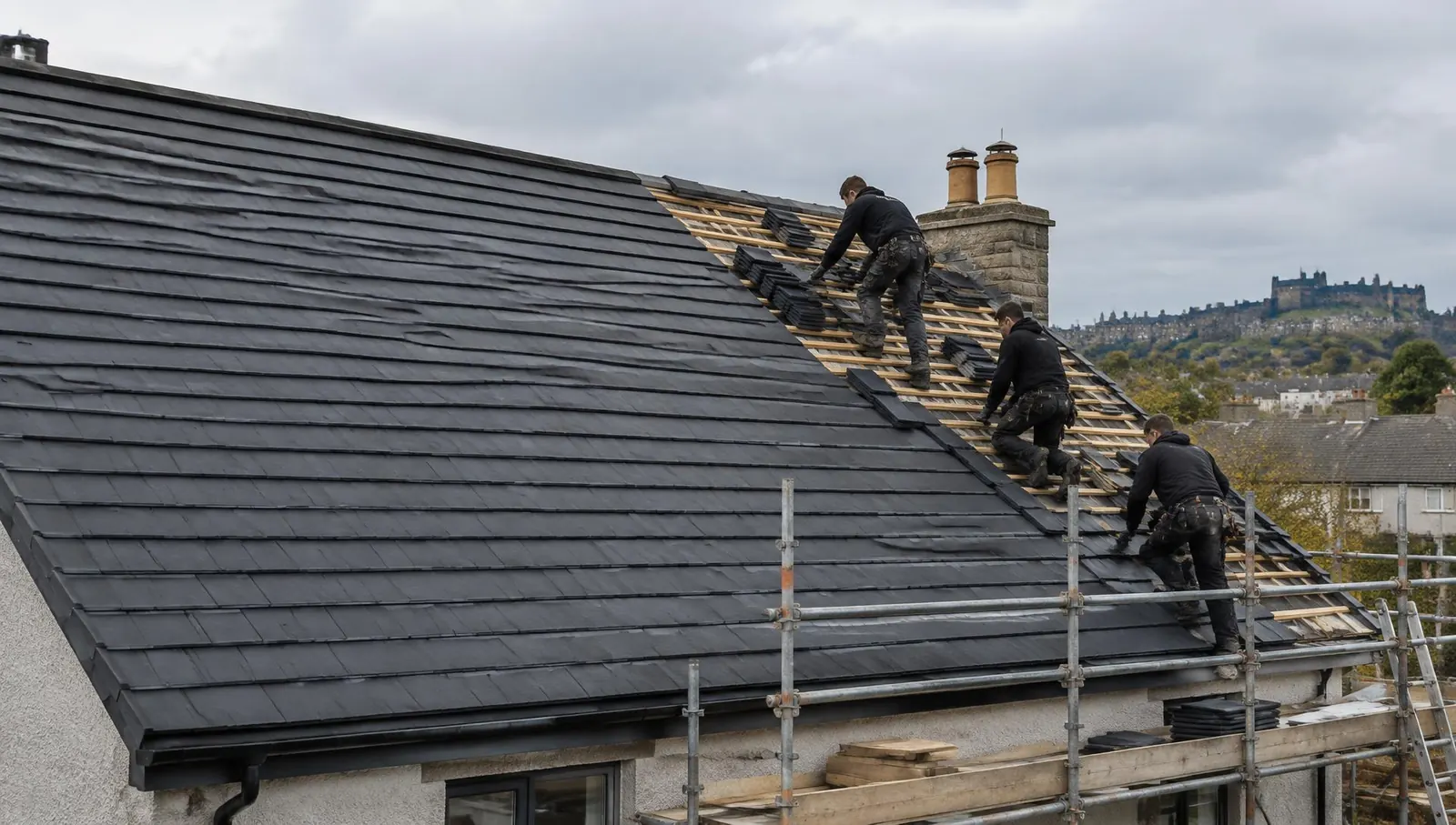
High Street rigs and the palace approach
Historic buildings line the High Street, with the Kirkgate processional route leading towards Linlithgow Palace beside the loch. The medieval burgh plan included rigs running back from the High Street. Current boundaries and access routes need checking at the property, particularly where a roof cannot be reached directly from its frontage.
On a roof retaining traditional materials, assess slate dimensions, chimney junctions and the condition of adjoining details before selecting a repair. West Lothian Council is the planning authority and is now based in Livingston, not Linlithgow. Ask about the actual property's designation and proposed work; this page does not assume a specific conservation boundary or listed status.
Canal- and railway-era growth, then present roof condition
The Union Canal arrived in the 1820s and the station opened in 1842, followed by rapid Victorian growth. That history is useful context for older villas and terraces, but later re-covering may have changed their roofs. Inspect current fixings, support and leadwork rather than date a covering from the age of the street.
A chimney-junction leak or a blocked valley may need only roof repairs. Wider deterioration across slopes can justify discussing roof replacements, while new roofs covers roofing for additions and other new structures. The evidence from the building should decide the scope, not an assumption that every canal-era roof is due for renewal.
Extensions, hidden junctions and rainwater
An older house may have a newer kitchen extension at the rear. Where the extension meets the original wall, the upstand and flashing need to keep water out while allowing the roof system to move as intended. Our flat roofing information covers falls, deck condition and drainage.
Gutters deserve attention where adjoining roofs feed into a short run or shared outlet. Overflow can soak masonry and resemble an indoor roof leak. See guttering and roofline for gutters, downpipes, fascias and roof edges. Replacing a gutter without checking its fall or discharge route may leave the underlying problem unresolved.
Access around the Cross and historic core
The Cross, Burgh Halls and St Michael's Parish Church are reference points within the burgh's historic setting. At adjoining properties, assess current access, roof heights and shared components before arranging equipment. A valley or chimney may involve neighbours, but responsibility depends on the building's documents rather than the medieval street plan.
St Michael's lost its stone crown spire to storm damage in 1768. That is a historic event, not current wind, rainfall or flood data for a homeowner's roof. For loose materials or active ingress, stay clear and read emergency roof repairs. Send safe ground-level photographs and the full EH49 address when arranging assessment.
Related roofing information nearby
For the broader regional picture, visit roofers in the Lothians. Neighbouring hubs for Bathgate and Falkirk provide further local context. A nearby address does not determine a specification: an older slate terrace and a later tiled detached house need decisions based on their own construction.
Roofing services in Linlithgow
Linlithgow roofing questions
How do Linlithgow’s High Street rigs affect a roofing enquiry?
They explain the historic burgh layout, but today's boundaries and access routes need checking. Describe the actual route to the rear and any neighbouring arrangements before work is planned.
Where should a Linlithgow homeowner ask about roof consent?
West Lothian Council is the planning authority, now based in Livingston. Check the property's designation and proposal rather than assume a listed status or conservation boundary.
Does the 1842 railway date establish the age of a Linlithgow roof?
No. It helps explain Victorian growth, but later roof replacement may have changed the covering. Survey current materials and condition before recommending re-slating.
Does St Michael’s 1768 spire damage prove today’s roofs face exceptional storms?
No. It is a recorded historic event, not modern weather data. Assess the roof's actual exposure and observed defects rather than infer local damage rates.