How to tell a roof is due for replacement
Roofs rarely fail overnight. The usual story is a slow build-up: more slipped slates or cracked tiles after each winter, repairs that keep reappearing in different places, daylight visible through the loft boards, or underlay that has turned brittle and torn. Nail fatigue — where the fixings holding slates rust through — is common on older Scottish roofs and causes slates to slide one after another.
When the cost and disruption of repeated call-outs starts to add up, and the problems are spread across the whole roof rather than one area, it is usually time to think about a replacement instead of another patch.
Our first step: a proper survey
Before recommending anything, we look at the whole roof and the loft space where we can. We check the condition of the slates or tiles, the timbers, the underlay, the ridge, the valleys and the chimney. Some roofs that look tired from the street are structurally sound and only need targeted repairs; others that look fine hide failing fixings or rot.
We will tell you honestly which camp your roof falls into. If a repair is enough, we will say so. If replacement is the right call, we explain why in plain language and put the full scope in a written quotation.
What a strip-and-replace involves
The old covering is removed section by section so the house is never left exposed for longer than necessary. Once the roof is open, we inspect the rafters and sarking boards and replace any damaged timber. New breathable underlay goes on, then battens set out to suit the chosen slate or tile.
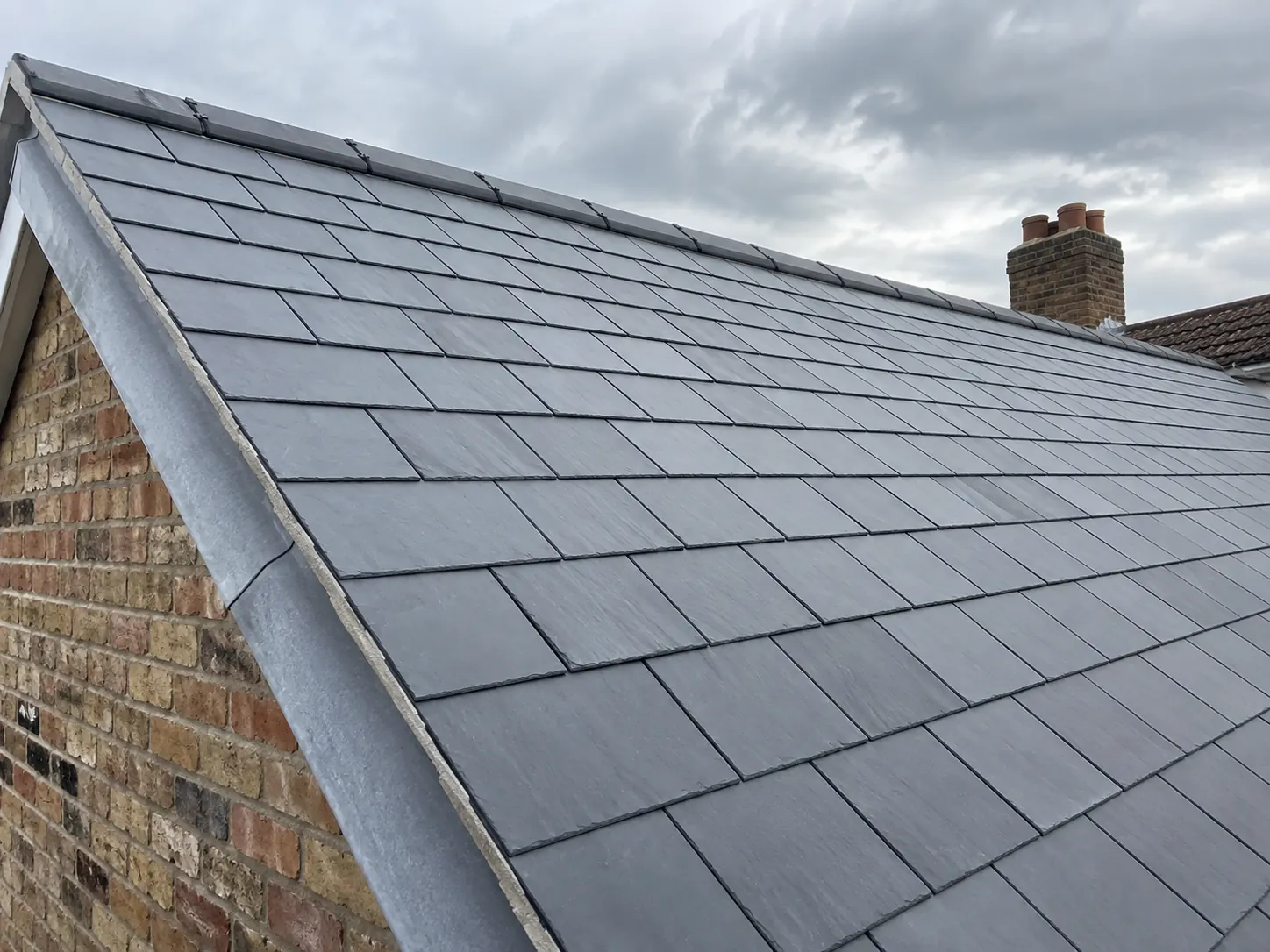
The new covering is laid and fixed, followed by the parts that finish a roof properly: ridge and hip, valleys, lead flashings at chimneys and abutments, and the verges at the gable ends. Gutters and roofline are checked at the same time, since it makes sense to deal with them while access is in place.
Choosing materials
Many homeowners replace like for like, and on traditional properties that is often the best option for appearance and planning reasons. Others take the opportunity to change material. We talk you through slate, tile and flat options for your particular roof, with the pros and cons of each, and our guide to slate versus tile covers the main differences.
Insulation and ventilation are also worth considering during a replacement, because the roof is open and it is the easiest moment to get them right.
Living at home while the roof is replaced
Most people stay in their homes throughout. We keep the site tidy, protect gardens and paths as far as we can, and make sure the roof is weathertight at the end of each working day. We will explain the order of work at the start, so you know roughly what is happening on which day, and let you know if the weather means changing plans.
At the end, old materials are removed and the property is cleared up, so you are left with a finished roof and not a mess.
Who you are dealing with
Rowan Roofing is a family-run business based in Cardenden, Fife, trading for 16 years with over 50 years of experience in the family. New roofs and replacements are the work we specialise in, and our van is lettered for Edinburgh, Perth and Dundee — we travel up to 50 miles for the right job.
You speak to the people doing the work, from the survey through to handover.
Getting a quote
To arrange a quote, call 07508 571291, or use the contact form to tell us your address, the type of roof and what you have noticed. Photos help if you have them. Our hours are Monday to Friday 7:30am to 6:00pm and Saturday 8:00am to 12:00pm.
Frequently asked questions
How do I know my roof needs replacing rather than repairing?
Widespread slipped slates, repairs that keep reappearing in different spots, daylight showing through the loft boards or brittle, torn underlay all point towards replacement rather than another patch. A survey of the whole roof, not just the obvious fault, is the reliable way to tell.
Do you remove the old roof covering entirely?
Yes, on a full replacement the old covering, battens and underlay are stripped so we can inspect the rafters and sarking boards underneath and replace anything that has deteriorated before the new covering goes on.
Can I change from slate to tile, or add a flat roof section, during a replacement?
It is possible on many properties, though planning rules or conservation status can limit the choice on some homes. We talk through the options for your roof and the practical differences between coverings before you decide.
Will you look at the gutters and chimney while the roof is open?
It is sensible to raise these during the survey. Guttering, roofline and chimney or lead work can often be dealt with at the same time as a replacement while access equipment is already in place.
If the building is an outbuilding rather than the main house, read about garage roof replacement.
Before changing the roof, check our guide to building warrants for a new roof.
A change in roof shape needs investigating: read about sagging roofs.