
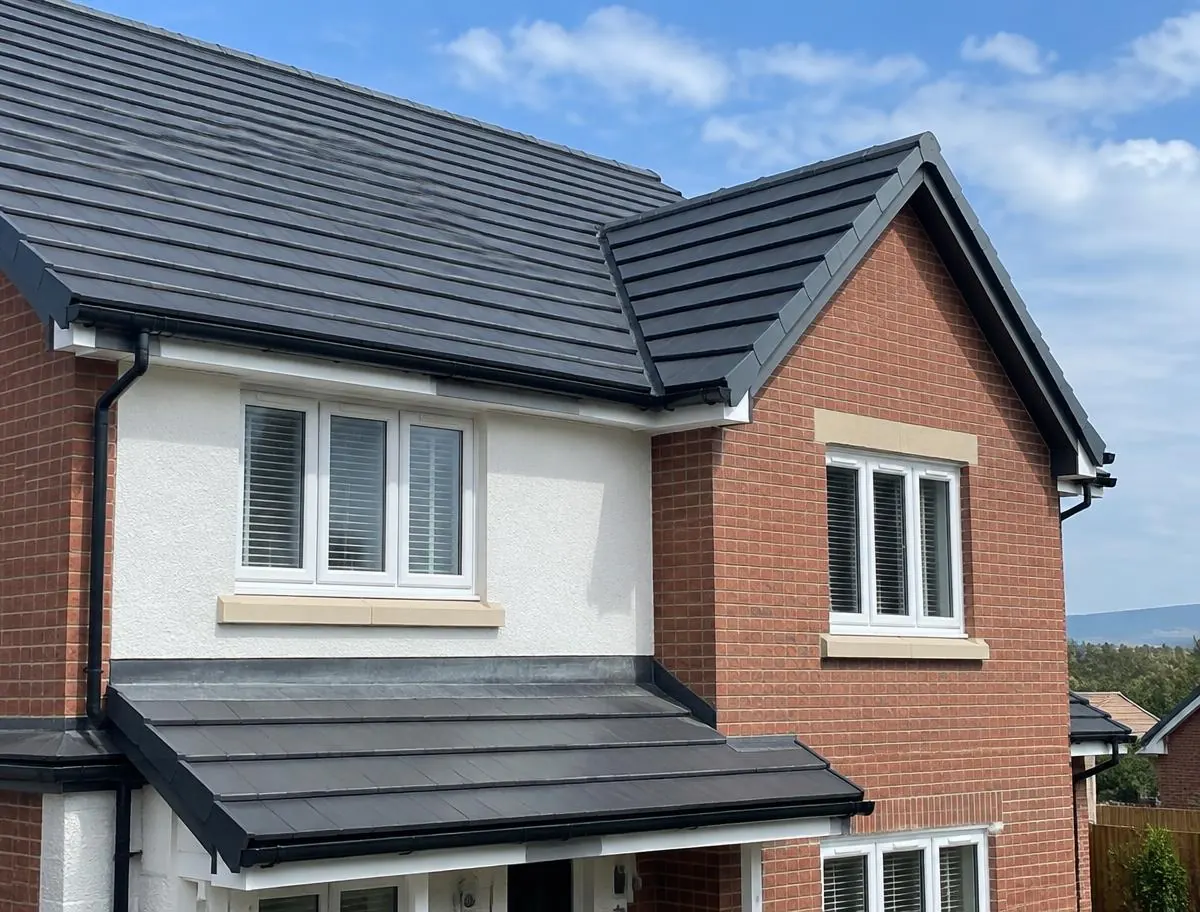
Two open bays: assess the exposed edges
The harbour and Scottish Seabird Centre mark the seafront, while West Links and the Glen sit within the wider coastal setting. Salt and wind can affect fixings, flashings and roof edges. Shelter, height and orientation still vary from property to property, including around North Berwick Law. Record the condition of exposed ridges and verges as well as the main covering rather than applying a fixed coastal replacement interval.
Inspect verges, eaves, ridges and fixings as well as central slopes. Wind can expose weaknesses before the covering seems generally worn. Emergency roof repairs may involve temporary protection before permanent work. Keep the area beneath displaced material clear rather than trying to move it from a ladder.
The burgh core and nineteenth-century resort roofs
The medieval burgh grew around the High Street, followed by the nineteenth-century resort era. Where older houses or resort villas have slate, lead valleys and chimneys, assess those details as connected weathering elements. A bay roof or intersecting slope can introduce a separate entry route for rain. The town's history does not establish that every villa is stone-built, listed or constructed with the same slate.
Interior staining may sit away from the defect. For limited deterioration, roof repairs retains sound surrounding material. Recurrent leaks need broader assessment, not an assumption that every stain has one cause. The inspection can compare roof-space evidence with external junctions where those areas are safely accessible.
What a slate renewal should explain
For widespread deterioration, re-slating covers both covering and support. Selective slate reuse depends on condition and consistency. Concealed sarking can only be assessed fully as exposed. The scope should state whether existing material is intended for reuse and how unsuitable pieces will be replaced within the agreed finish.
Roof replacements scopes distinguish retained and new materials and describe valleys, flashings, ridges and edges. Explain newly discovered timber defects and relevant conservation or listed requirements before changing appearance. A comparable proposal addresses those details as well as access and removal, not simply the name of the new slate.
Keep additions and drainage in the plan
A large main roof can overshadow a small extension, although their connection may be weak. Flat roofing requires decks, drainage and upstands. A new surface cannot resolve movement or decay underneath. Check the available height where a low extension roof meets the older house before changing its build-up.
For new roofs, coordinate structure, insulation and ventilation before covering selection. Guttering and roofline deserves attention where concentrated runoff could wet stonework. Gutters and downpipes need sufficient support and an appropriate discharge route rather than simply matching the arrangement previously installed.
Quality through a defined specification, not assumptions
East Lothian Council is the planning authority. Verify the building's listed status and any relevant controls before changing visible roof materials or chimney details; a historic-looking house is not proof of designation. Compare proposals by covering quality, fixing suitability, retained details, access and weather protection. For modern roofing or a newly formed addition, check the actual deck, drainage and junctions rather than assuming planned housing has already been built.
The Lothians roofing hub compares coastal properties with inland and later housing. Retain material specifications and photographs after completion so future repairs can use compatible details and distinguish the original roof from subsequent changes. This is useful where separate bays or extensions have been renewed at different times.
Roofing services in North Berwick
North Berwick roofing questions
Do the two bays mean every roof has identical coastal exposure?
No. Height, orientation, surrounding shelter and roof geometry affect conditions. Salt and wind are reasons to inspect exposed fixings, ridges and flashings, not proof of equal deterioration across the town.
Are nineteenth-century resort villas automatically listed?
No. Check the actual address and proposed work with East Lothian Council. Age and appearance alone do not establish listed status or which approvals are needed.
What should a slate renewal near the old High Street retain?
Assess the existing covering, dimensions, ridges, lead junctions and chimneys where present. Sound material may be reusable if suitable, with the intended finish following the building's condition and any property-specific controls.
How can I judge the quality of a coastal roof proposal?
Look for a defined covering and fixing specification, treatment of edges and flashings, drainage, retained materials and inspection limits. A material name or the property's value cannot establish that the complete roof has been properly specified.