
Begin with levels, thresholds and the Dundee site
Balgay Hill reaches 143 metres and Dundee Law 174 metres, with Gallow Hill also part of the city's line of hills. These landmarks describe the city's topography, not the elevation of every house. For a flat-roofed addition, measure the actual surrounding ground and working heights. A roof reachable from one elevation may require different access arrangements on another.
Check the finished surface against doors, windows and adjoining walls before selecting deck, insulation and waterproofing. Limited upstand height can matter more than the nominal roof area. Where an addition shares boundaries or drainage with another property, identify the connections and access rights early. Roof construction should respond to those measured details rather than to a presumed Dundee tenement layout.
Keep the Tay setting separate from drainage design
Dundee sits on the north bank of the Firth of Tay. Exposure will vary with orientation, elevation and nearby shelter; it cannot be established from the postcode alone. Perimeters and changes of level need detailing appropriate to the actual site, with supporting structure and fixing requirements considered together.
Water arriving from an adjoining roof must be distinguished from rain falling directly on the flat surface. Designed falls should lead to suitable outlets, while blocked drainage or awkward wall connections can create a leak that a new membrane alone will not resolve. Record levels and discharge routes so the renewal scope addresses the complete system.
Consider the complete roof build-up
A flat roof includes more than its visible waterproof layer. The deck, insulation, moisture control, falls and outlets work together. Decisions about a warm or cold roof arrangement require an understanding of the existing structure and condensation risks, particularly where an older addition has been altered over time.
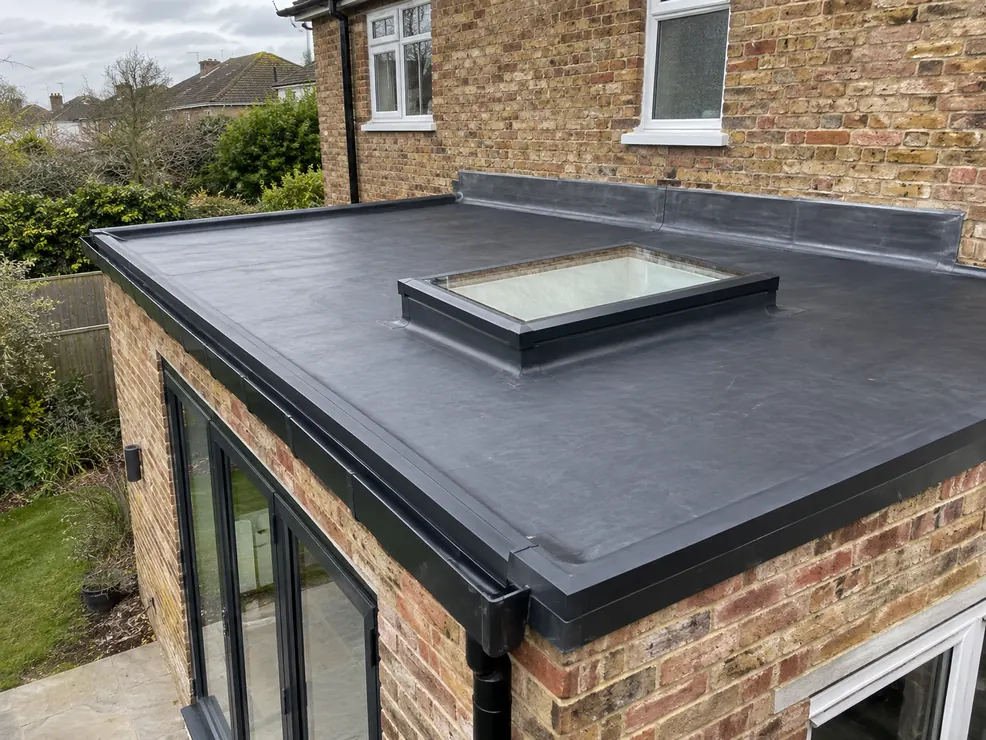
Coverings commonly discussed for flat roofs include bituminous felt, EPDM rubber, GRP fibreglass and other membrane systems. Each has specific requirements for substrates, joints and detailing. Material selection should follow the roof's layout and technical requirements. The EPDM rubber roofing page explains flexible membranes without treating the covering name as a complete specification.
Plan inspection and repair through the roof's life
Routine observation can identify blocked outlets, accumulated debris or changes around rooflights before the next maintenance decision. Inspections should use suitable access rather than casual foot traffic across the covering. Keep records of alterations, previous leaks and any work around adjoining walls or services.
Flat roof repairs in Dundee should distinguish isolated damage from wider deterioration. A split near an edge may have a different cause from recurring damp beneath several locations. The condition of the deck and insulation matters when deciding whether a local repair can address the actual problem. See flat roof repairs for repair-specific considerations.
Renewal permissions and connected roofs
Recurring ingress, deterioration over a broad area or moisture inside the roof build-up may justify renewal rather than another patch. Establish what will be removed, how the deck will be assessed and whether falls or outlets need changing. Preserve evidence of unresolved defects rather than concealing them below a fresh covering.
Dundee City Council is the planning authority. Conservation areas include West End Lanes and West End Suburbs; check the actual property before changing visible roof-edge details, heights or adjoining finishes. A flat-roofed addition is not automatically exempt from property-specific controls. Confirm shared ownership and access where relevant. Our roof repairs in Dundee page covers other faults, while new roofs in Dundee explains whole-roof renewal planning.
Flat roofing in Dundee questions
Can a flat roof near Balgay Hill have different access heights around it?
Yes. Sloping ground can change the working height between elevations. Measure the actual site and plan safe access and material routes rather than assuming the roof is equally low on every side.
Does a Tay-facing Dundee flat roof need its own drainage assessment?
Yes. Orientation and exposure are only part of the setting. Falls, outlets and water arriving from connected roofs must be assessed so the proposed covering does not conceal a drainage defect.
Should Dundee City Council be consulted about a flat roof in West End Lanes?
Check the property's conservation status and the proposed alterations with the council. Visible edges, roof height or adjoining details may need consideration even when the main work concerns waterproofing.
Can extra insulation fit below an existing Dundee extension threshold?
Only measurements and design checks can answer that. Additional build-up changes available upstand and threshold heights, so thermal, moisture and junction requirements must be considered together.
Ask for a written quote
Call 07508 571291 (Mon–Fri 7:30am–6:00pm, Sat 8:00am–12:00pm) or send your details through our contact page.