What is EPDM roofing?
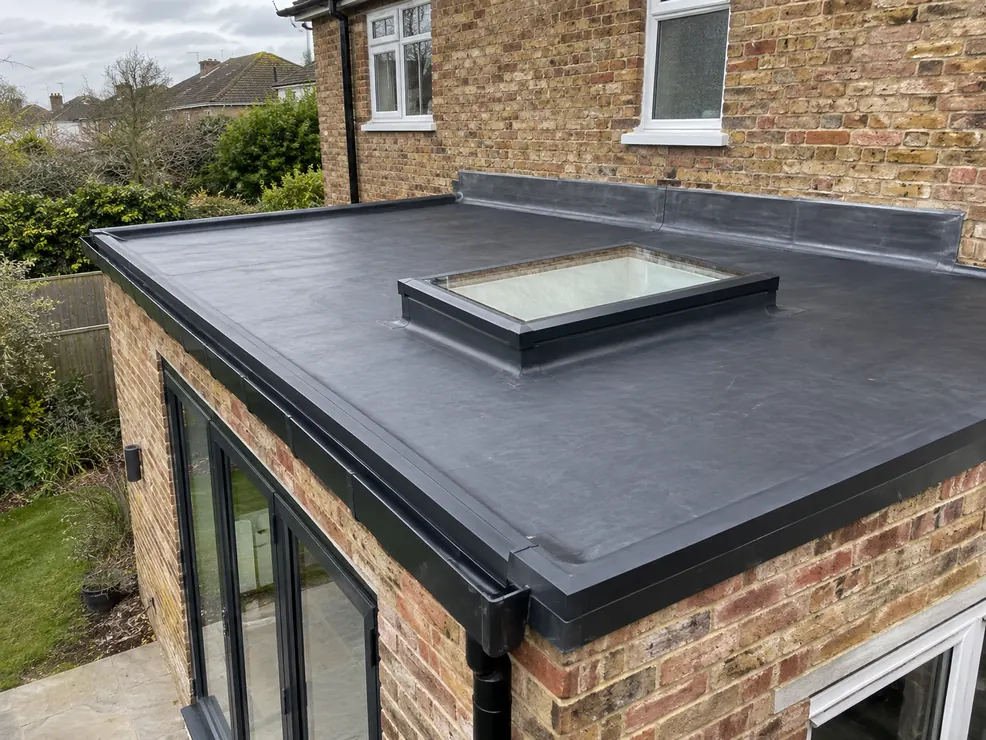
EPDM stands for ethylene propylene diene monomer, a synthetic rubber membrane supplied in large sheets rather than the multiple layers used for felt. Because a roof can often be covered with one or two sheets, there are far fewer joints than a built-up felt system, although perimeter details and any remaining seams still need appropriate sealing.
The membrane is flexible and designed to move with the deck as it expands and contracts, which can help it cope with the small movements that gradually tire other coverings over time.
What is EPDM roofing material?
The rubber sheet itself is a single, uniform layer rather than a sandwich of components, usually fixed with a bonding adhesive across the deck and secured mechanically or with trims at the edges. Seams between sheets, where a roof is too large for one piece, are joined with a specialist tape or adhesive rather than heat welding.
Because the material is supplied in wide rolls, many domestic garage and extension roofs can be covered with a single uninterrupted sheet, which is one of the main practical advantages over felt flat roofing.
Are EPDM roofs any good?
EPDM has a strong general reputation among flat roof coverings because of its resistance to UV light, its flexibility in cold weather, and the small number of joints involved. Many of the leaks that affect felt or poorly detailed roofs start at seams and upstands, and a single-sheet rubber roof changes the number of seams without removing leak risks at edges or penetrations.
It is not automatically the right choice for every roof, though. Shape, size, budget and the condition of the existing deck all play a part, and comparing it against felt flat roofing or GRP fibreglass roofing for your particular roof is a sensible step before deciding.
Where rubber roofing suits a project
Rubber membranes are often considered for garages, dormer roofs, extensions and outbuildings where a clean, low-maintenance finish is wanted, and they are also used on some garage roof replacement projects. As with any flat roof, the deck beneath has to be sound, level and properly falled towards the drainage point before the membrane is fitted.
EPDM should be assessed against the actual roof during a site visit, since access, roof shape and existing construction can all affect whether it is the right system. Weather conditions on the day can also influence how well the bonding adhesive cures, which is another reason scheduling tends to be flexible around this kind of work. Our flat roof replacement cost guide sets out the broader factors that influence pricing across flat roof coverings.
Frequently asked questions
What is EPDM roofing?
EPDM roofing is a single-ply synthetic rubber membrane used to waterproof flat roofs, typically supplied in large sheets that reduce the number of joints compared with layered felt systems.
Are EPDM roofs any good?
EPDM has a strong reputation for flexibility, UV resistance and fewer seams than felt, which can reduce common leak points, though suitability still depends on the shape and condition of the specific roof.
What is EPDM roofing material?
It is a rubber membrane made from ethylene propylene diene monomer, bonded to the roof deck and joined at any seams with specialist tape or adhesive rather than heat or an open flame.
Can EPDM be fitted over an old felt roof?
It depends on the condition of the existing covering and deck. A sound, dry, well-fixed surface may be suitable as a base, but a damaged or wet deck normally needs addressing first.
Still choosing a covering? Our EPDM vs GRP flat roof comparison also considers felt, including seams, repairability and the finished appearance.
Ask for a written quote
Call 07508 571291 (Mon–Fri 7:30am–6:00pm, Sat 8:00am–12:00pm) or send your details through our contact page.