What is GRP roofing?
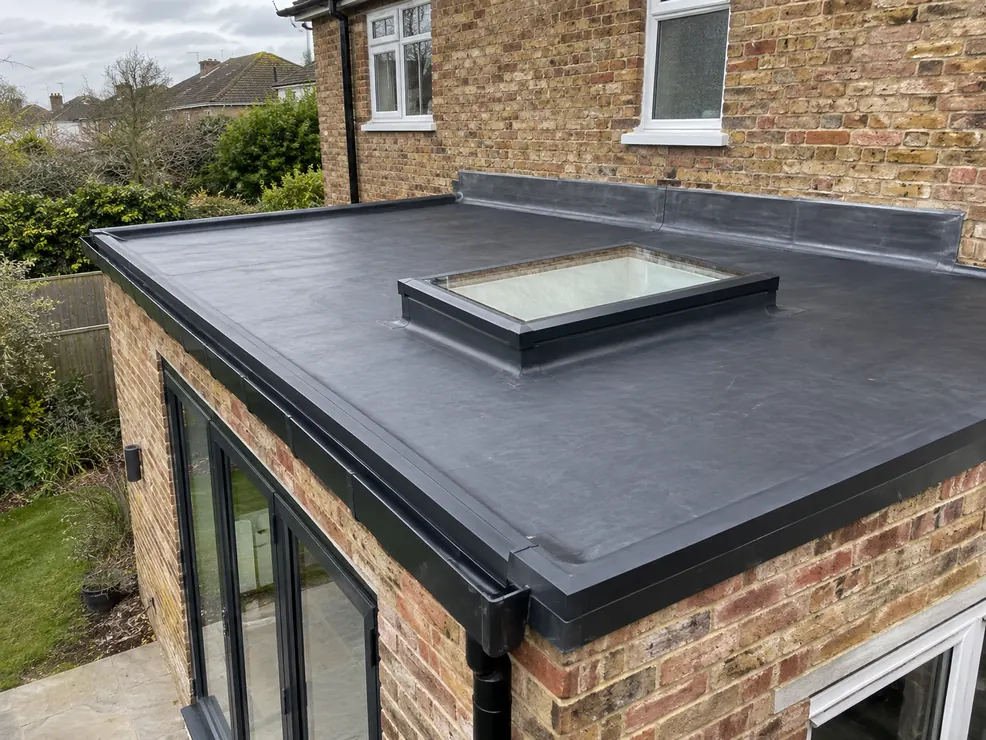
GRP roofing is formed by laminating layers of fibreglass matting with liquid resin directly onto a prepared timber deck, which then cures into a rigid, fully bonded, jointless surface. Because the roof is effectively moulded in place rather than assembled from sheets, the open field can be continuous, while trims, junctions and movement details remain potential weak points.
A top coat gives the finished surface its colour and UV protection, and trims or upstands are usually laminated at the same time so the whole roof forms one continuous skin.
How a GRP roof is built up
The selected GRP system determines its required decking, fixings, laminate and topcoat. The base must be dry, stable and prepared to that specification. Resin wets out the glass reinforcement before curing; installing it over an unsuitable surface can leave defects that the finishing coat cannot correct.
Work of this kind is weather-dependent, since damp conditions can affect how the resin cures, which is one reason scheduling and site preparation matter as much as the materials used.
A proposed specification should identify the compatible deck and perimeter components, not just the resin finish. Ask how existing junctions and any movement requirements will be addressed, and how the proposed build-up suits the building.
What are common fibreglass roof problems?
The most frequent issue is cracking or crazing in the top coat, often caused by movement in the deck underneath rather than a fault in the resin itself, so a roof that flexes or was laid on an unstable base is more likely to show this over time. Poor adhesion at upstands and trims, usually from inadequate preparation, can also allow water to track in at the edges.
Because the surface is rigid rather than flexible like EPDM rubber roofing, significant movement in the building structure can eventually show as cracking, which is worth discussing if the roof spans a large or unusually built area. A well-prepared deck and correctly applied layers address most of these risks before they start.
Choosing between GRP, felt and rubber
GRP suits roofs where a seamless, hard-wearing surface is wanted and the deck can be properly dried out and stabilised before work begins, while felt flat roofing and EPDM each have their own strengths depending on roof shape, budget and timescale. None of the three is a universal best option, and the right choice depends on the specifics of your roof.
If your existing flat roof is leaking, it is worth reading our flat roof leaking guide before choosing a replacement system, since the cause of a current leak can affect which covering makes sense. Our flat roof replacement cost page also covers how pricing varies across different flat roof materials.
Frequently asked questions
What is GRP roofing?
GRP roofing, or glass-reinforced plastic, is a seamless flat roof system formed by laminating fibreglass matting with resin directly onto the roof deck, creating a rigid, jointless waterproof surface.
What are common fibreglass roof problems?
The most common issues are cracking or crazing in the top coat, often linked to movement in the deck beneath, and poor adhesion at upstands where preparation was inadequate before the resin was applied.
How long does GRP take to cure?
Curing time depends on the resin used, the temperature and humidity on the day, and the number of layers applied, which is why GRP work is scheduled around suitable weather conditions.
Is GRP suitable for every flat roof?
It suits many roofs, but the deck must be dry, stable and well-fixed before resin is applied, so an assessment of the existing structure is needed to confirm it is the right system for a particular roof.
For a side-by-side look at reinforced resin, rubber sheet and felt, read EPDM vs GRP flat roofs.
Ask for a written quote
Call 07508 571291 (Mon–Fri 7:30am–6:00pm, Sat 8:00am–12:00pm) or send your details through our contact page.