Need this sorted?
Need help with chimney and lead work? Get a quote from Rowan Roofing.
The junction determines the specification
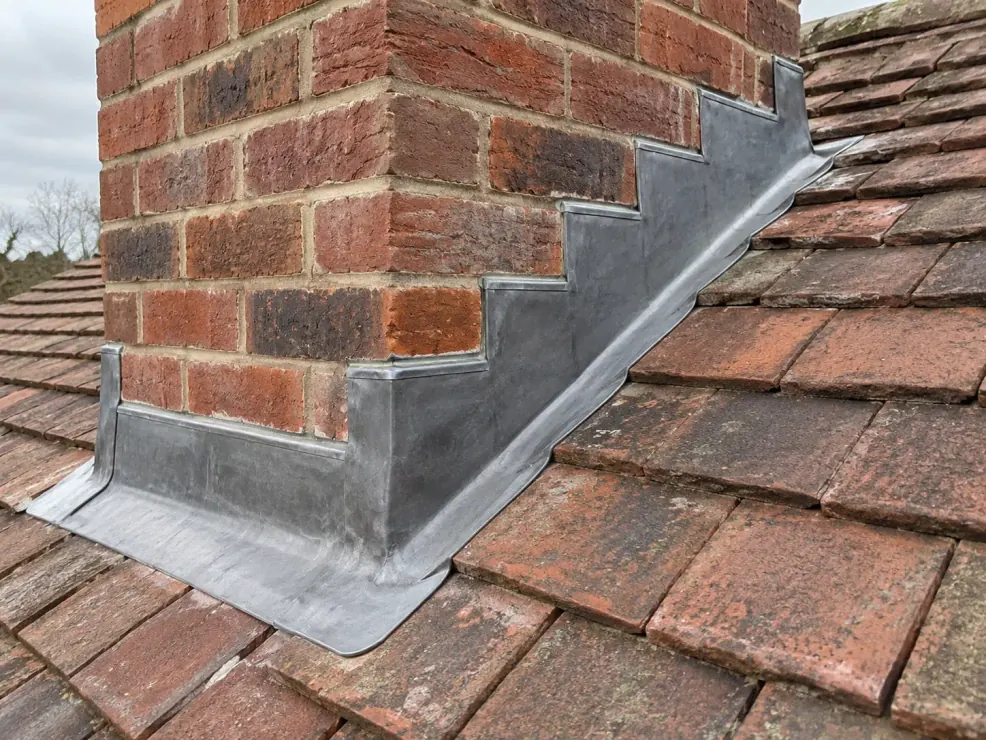
Flashing directs water away from the point where roof surfaces meet another part of the building. At a chimney, the apron, side details and back gutter perform different roles. At a wall abutment, the arrangement depends on the roof slope, covering and masonry. These are not interchangeable strips of metal.
A useful quote identifies the actual detail being repaired or renewed. An undefined allowance for lead work makes comparison difficult because it may describe anything from refixing a loose edge to replacing the complete junction. Our chimney lead work page covers the relevant service.
Length, shape and detailing complexity
A longer abutment generally involves more material and work, but length alone does not establish the scope. Corners, changes in roof level, stepped masonry joints and awkward returns increase the detailing required. Access to the back of a chimney can make a short section more involved than a longer open wall junction.
The layout must also accommodate movement rather than relying on an oversized uninterrupted piece. Ask how the proposed arrangement suits the junction and where overlaps or joints are needed. A simple rate applied to visible length can overlook the work that makes the detail function.
Lead code, thickness and support
Lead code refers to the material's thickness and associated weight. The appropriate specification depends on the application, dimensions, exposure and supporting detail. Thicker material is not a substitute for correct sizing, support and movement allowances, and a thinner substitute should not be accepted solely because it reduces the quotation.
The written scope should identify a suitable material specification rather than saying only new lead. Fixings, laps and the method of securing the flashing into masonry also matter. Unsupported areas, sharp edges beneath the material or restricted movement can undermine otherwise adequate lead.
Chimney and lead work
- Lead flashings, aprons and back gutters at chimney junctions.
- Repointing, flaunching and re-bedding loosened chimney pots.
Bay roofs, porches and material compatibility
Bay and porch roofs often have tight corners, shallow slopes and visible front edges, making both drainage and appearance important. Their junction with the main wall may need attention alongside the roof covering. Timber support, trapped moisture and existing patch materials can affect the extent of preparation.
Compatibility needs checking between lead, adjacent metals, membranes and treatments that may contact it. The water route matters as much as the material label. See bay and porch roofs when the flashing forms part of a smaller roof rather than an isolated chimney repair.
Access and the condition beneath the flashing
Scaffolding or other suitable access may be needed to work safely and form the detail properly. Roof pitch, height, restricted ground space and nearby extensions affect the arrangement. A quotation that includes access cannot be compared fairly with one that leaves it for the customer to organise.
Removing old flashing may expose defective masonry, damaged underlay or deteriorated timber. Ask how concealed findings will be recorded and how additional work will be agreed. Where the stack itself needs attention, our chimney repair cost guide explains the wider items that can sit alongside lead renewal.
Repairing existing lead or renewing the detail
A local repair may be reasonable where the lead remains sound and the fault is limited, such as a defective fixing into masonry. Renewal becomes more relevant where there are repeated splits, unsuitable dimensions, poor support or several layers of unsuccessful patching. The decision should follow the condition and design of the whole detail.
Sealant alone does not restore missing overlaps or correct movement problems. Ask what caused the failure and how the proposal addresses it. Keeping serviceable material can avoid unnecessary work, but retaining lead that cannot perform properly may simply postpone another intervention.
Alternatives and comparing written quotations
Proprietary non-lead flashing products may suit some applications, provided the system is compatible with the roof, exposure and intended detail. They should not be treated as universal replacements. Preparation, fixing, movement and manufacturer requirements still matter, so compare complete systems rather than material names alone.
A clear quotation should describe removal, preparation, material specification, access, adjoining repairs and waste disposal. Confirm exclusions, tax treatment and the process for hidden defects. An estimate may change as information develops; a quotation should define the work and relevant conditions clearly enough to support an informed decision.
Need it sorted? Book lead flashing work
Frequently asked questions
Can lead flashing cost be worked out from length alone?
Length is useful information, but it does not capture corners, back gutters, access, support or material specification. Two junctions of similar length can require quite different preparation and detailing, so a measured scope is more informative.
Does split lead always mean the material was too thin?
No. Splitting can also relate to restricted movement, unsuitable dimensions, poor support or the way the detail was formed. Replacing it with thicker lead without correcting the cause may leave the underlying problem unresolved.
Can new flashing be fitted over old patches?
That depends on what is beneath them and whether a sound, compatible detail can be achieved. Covering unknown layers may conceal defects or restrict drainage. The proposal should explain what is removed and how the underlying junction is prepared.
Should chimney repointing happen before flashing renewal?
The sequence should be coordinated around the condition of the stack and the fixing detail. Masonry preparation may need to come first, while final junction work must leave the flashing properly secured and able to accommodate movement.
Related services
Covering Edinburgh, Perth and Dundee.