Need this sorted?
Need help with chimney and lead work? Get a quote from Rowan Roofing.
Is the chimney actually letting water in?
Notice when the damp appears. A patch that worsens during wind-driven rain suggests an external route worth investigating. Moisture that develops without rain may have another cause, including condensation within a cold or unused flue. Neither pattern is a diagnosis on its own. The position of a mark on the chimney breast also does not identify the exact defect above it.
Water can enter the surrounding roof and follow timber or masonry before reaching the room. Keep a record of the weather, which side of the breast is affected and whether the mark dries between wet periods. Photographs taken safely indoors or from the ground are useful. Our roof leak guide explains the wider roof symptoms if the source is uncertain, without asking you to investigate at height.
Flashing and the junction with the roof
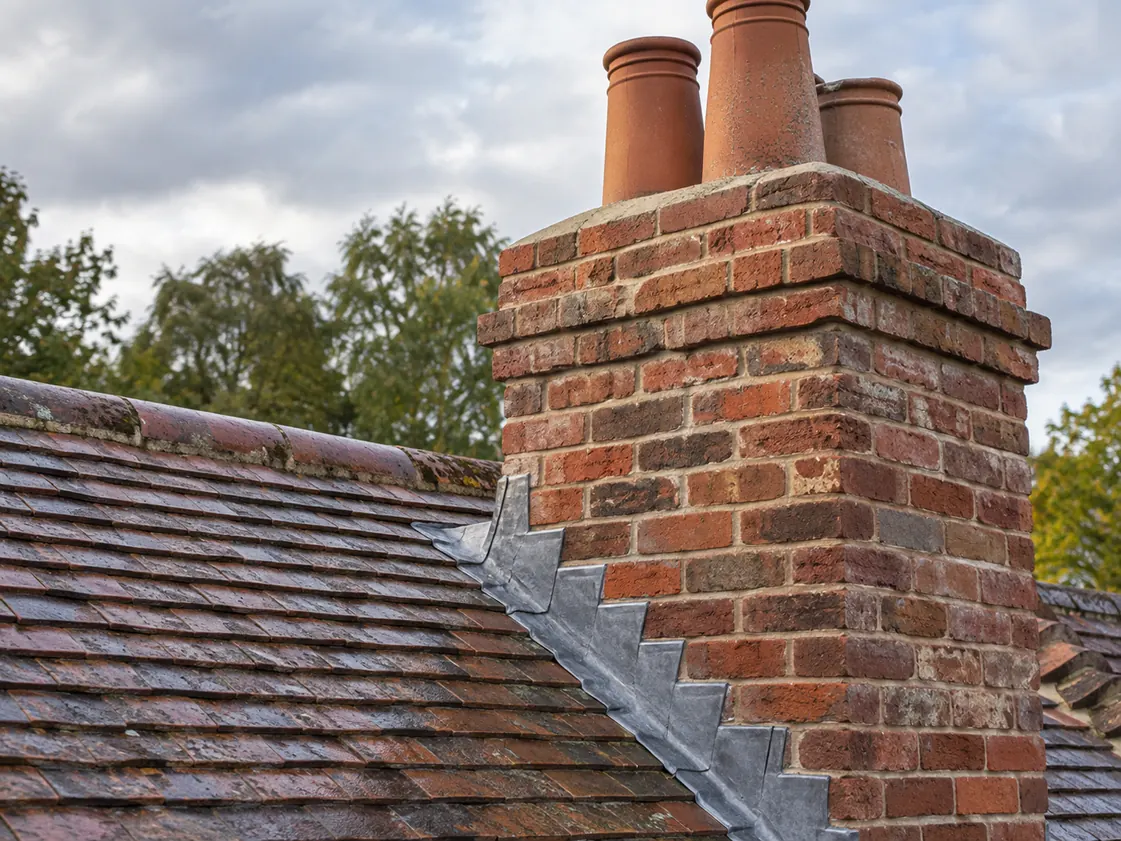
Lead flashing forms a weather-resistant junction where a roof meets the stack. On some pitched roofs, soakers sit beneath the covering to help direct water away from that meeting point. If the lead has split, slipped or lifted, rain can reach the joint behind it. The groove holding the flashing, its fixing and the adjacent slates or tiles need checking together.
A repair needs to suit the fault. Putting sealant over a visible gap may leave displaced lead or a damaged neighbouring slate untouched. Sometimes a detail can be repaired; sometimes deteriorated flashing needs renewing. Our chimney and lead work page covers this service. Ask the written quote to identify which junctions need attention rather than describe the entire job simply as stopping a leak.
Mortar joints and exposed masonry
Scottish chimney stacks may be built from stone or brick. Their exposed sides receive rain as well as their tops, and open mortar joints can give moisture a route into the masonry. Loose material, cracks and weathered surfaces need assessing for both water entry and stability. A stack can absorb moisture without a visible hole through its outside face.
Repointing means attending to defective mortar joints, but it is not the answer to every damp chimney. The condition of the stone or brick, the suitability of the repair and the flashing below must also be considered. Covering a whole surface without understanding the cause can conceal deterioration. Describe anything that has fallen to the ground, and do not approach a stack that appears loose or leaning.
Chimney and lead work
- Lead flashings, aprons and back gutters at chimney junctions.
- Repointing, flaunching and re-bedding loosened chimney pots.
The top of the stack: flaunching, pots and caps
Flaunching is the shaped mortar around the chimney pots at the top of a stack. It helps shed rain and holds the upper details in place. Cracks, broken edges or loose pots can admit moisture and raise a separate safety concern. These parts are difficult to judge from below, so ground-level photographs are a starting point rather than proof that the top is sound.
An unused chimney still needs suitable weather protection and ventilation. A cap is not simply a lid to close any opening, and an active flue needs arrangements compatible with its use. Tell the roofer whether the chimney serves an appliance and whether that use has changed. Do not block a flue yourself or assume that removing a pot alone solves moisture within the breast.
Repair, retain or consider removal?
For a sound stack with a specific defect, repairing the lead or masonry may be the sensible route. An unused stack with repeated problems raises a different question about retention. Removal affects the roof opening and can involve structural considerations, shared ownership or permissions. It is not a decision to make from the indoor damp mark alone.
Our chimney removal cost guide looks at the scope to discuss without giving a universal price. Compare what repairing and retaining the stack would involve with what removal would require. Be clear about whether you mean the part above the roof or other chimney structure as well, because those are different proposals and should not be treated as interchangeable in a quotation.
What to send when booking a check
Send the address, the affected room and what you have observed during rain. Include a safe photograph of the stack if available, and mention previous flashing or pointing work. If you know whether the chimney is shared or still used, say so. Those details help frame the inspection; they do not replace looking at the roof and chimney together.
Rowan Roofing is a family-run firm based in Cardenden, with over 50 years of roofing experience in the family. For the wider service, see roof repairs. Call 07508 571291 or use the contact page to discuss the problem and a written quote. Ask which parts of the stack and roof junction the proposed work covers, and whether any separate permission or specialist assessment needs resolving first.
Want a professional to handle it?
Frequently asked questions
Why does my chimney leak only in storms?
Wind-driven rain can reach open joints or vulnerable flashing that ordinary rainfall does not expose in the same way. The roof around the stack also needs checking because the visible damp may have travelled from elsewhere.
Can new lead flashing stop the leak?
It can address a leak caused by failed flashing, but it will not solve defective masonry or another roof fault. Have the source assessed and ask the written quote to explain why lead work is recommended.
Is it worth removing a chimney I don't use?
That depends on its condition, the work needed to retain it and the implications of removal. Structural support, ownership and permissions may affect the choice. Compare the proposed scope before deciding rather than assuming disuse makes removal straightforward.
Can a damp chimney breast be caused by condensation?
Yes. Moisture can condense within a cold flue or masonry, particularly where ventilation or use has changed. Rain penetration remains another possibility, so the timing and pattern of damp need investigating.
Do chimney repairs need scaffolding?
Access depends on roof height, the stack's position and the work involved. Safe working arrangements should be identified for the particular job and explained in the written quote, rather than assumed from a photograph.
Related services
Covering Edinburgh, Perth and Dundee.