Need this sorted?
Need help with chimney repairs? Get a quote from Rowan Roofing.
Start with the condition, not the stain
Damp indoors does not establish the extent of chimney repairs. Water may enter through flashing, open mortar joints, damaged flaunching or another part of the roof. A leaning stack, loose masonry or fallen fragments raises different questions about stability and safe access.
The assessment should distinguish the source of moisture from the condition of the structure. Our chimney leaking guide explains common routes. Ask which findings support the proposed work, especially if a quotation moves from a local repair to substantial reconstruction without explaining why.
Access, scaffolding and stack height
Access can be a substantial part of chimney repair cost because the working position must allow safe handling of masonry, tools and waste. Stack height, roof pitch, ground conditions and obstacles such as conservatories affect the arrangement. A stack near the ridge presents different access requirements from one beside an accessible gable.
Check whether the quotation includes scaffold provision, any necessary permissions and removal afterwards. Shared access routes or a pavement position may require additional coordination. Comparing a fully allowed access arrangement with a quote that leaves it unspecified gives a misleading impression of the difference.
Repointing versus partial rebuilding
Repointing addresses deteriorated mortar joints where the surrounding masonry remains suitable. The work involves preparing the joints and using a mortar appropriate to the existing construction. Superficial smearing over loose material is not equivalent to properly specified repointing, even if the finished colour looks similar from the ground.
Rebuilding becomes a different scope when masonry is loose, displaced or too damaged to retain. The quote should identify the extent to be taken down, the materials proposed and how adjoining areas will be protected. Matching older brick or stone can also affect sourcing and labour.
Chimney repairs
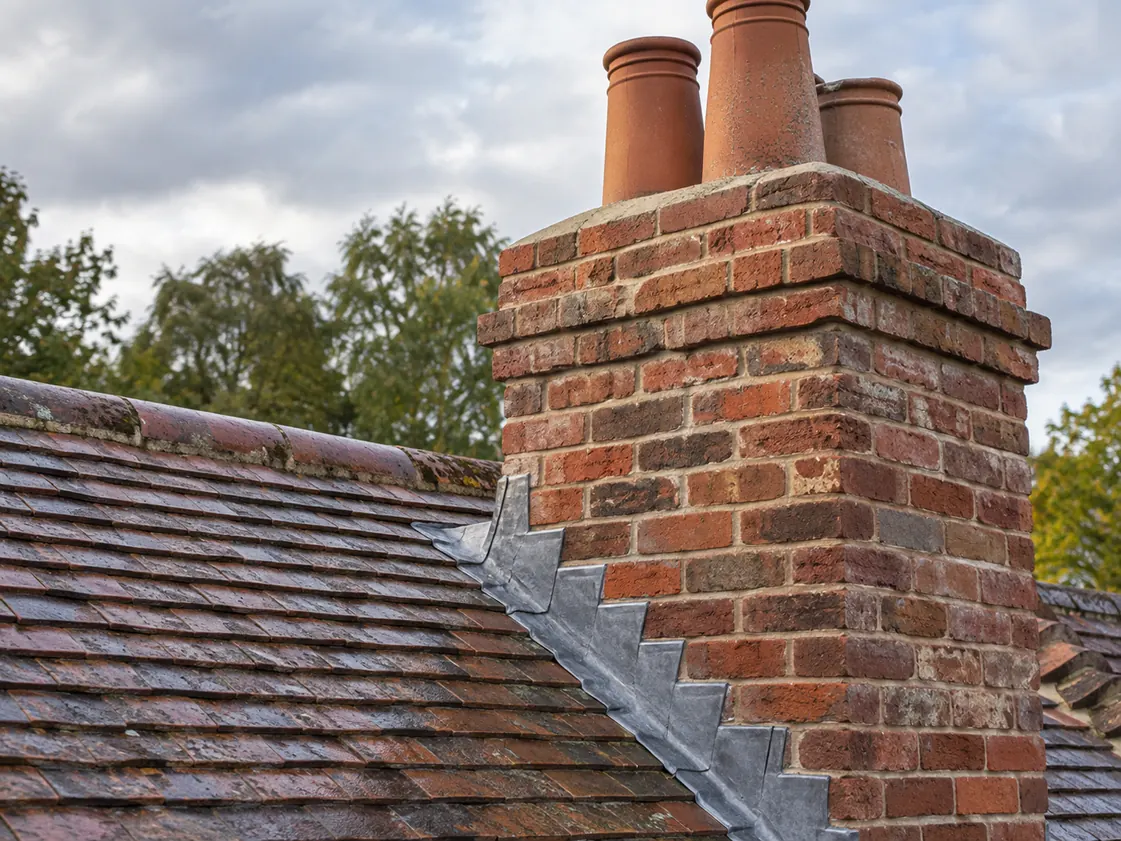
- Stack masonry and roof junctions influence the repair scope.
- Access and the parts requiring attention belong in a written quote.
Lead flashing and roof junction work
Lead around a chimney includes details that direct water away from the junction with the roof. Repairing a loose masonry fixing is not the same as renewing split or unsuitable lead. The stack's shape, roof covering and condition of the surrounding tiles or slates influence the necessary work.
Ask whether the proposal includes the relevant apron, side details and back gutter, rather than an undefined flashing repair. Our lead flashing cost guide explains specification factors. Masonry repairs and flashing renewal should be coordinated so new work is not disturbed unnecessarily afterwards.
Flaunching, pots and suitable terminals
Flaunching is the shaped mortar around the bases of chimney pots, helping shed rain from the top of the stack. Cracking, poor falls or loose pots can require work even when the stack's sides remain sound. The number and condition of pots affect materials, handling and the repair sequence.
Caps, cowls and other terminals must suit the flue's use. An active appliance and a redundant flue have different ventilation and safety requirements. The quotation should describe the intended arrangement rather than treating any cap as interchangeable, with appropriate appliance advice where a working flue is involved.
Shared tenement stacks and decisions
A tenement stack may serve several properties or contain flues with different uses. Before agreeing the work, establish ownership, maintenance responsibilities and who can authorise the proposed scope. A factor may coordinate access and contributions, but the relevant title documents and arrangements need checking rather than assuming equal responsibility.
A shared written specification helps owners compare the same repair rather than separate descriptions of the problem. If removal is being considered, structural support, permissions and active flues need attention. Read chimney removal cost before treating removal as a straightforward alternative to repair.
Compare quotes, estimates and exclusions
An estimate is an indication based on the information available; a quotation normally sets out a price for defined work, subject to its stated terms. Read the wording rather than relying on the document heading. Confirm whether tax, waste removal, access and making good are included.
Hidden deterioration can change the scope once work begins. Ask how findings will be recorded and additional work authorised before proceeding. The chimney repairs page is the service starting point. Compare the specified outcome and exclusions, not simply the total at the bottom.
Need it sorted? Book chimney repairs
Frequently asked questions
Can photographs establish chimney repair cost?
Photographs can help describe the problem and access, but they may not reveal loose masonry, concealed flashing defects or the condition behind the stack. A reliable scope needs enough inspection to distinguish visible symptoms from underlying damage.
Does every chimney repair require rebuilding?
No. Sound masonry may need repointing or attention to a particular top detail or roof junction. Rebuilding should follow evidence that the affected masonry cannot reasonably be retained, rather than being assumed from staining alone.
Will a taller chimney always have a higher repair price?
Height can affect access and handling, but it is not the only factor. A shorter, badly deteriorated stack in an awkward position may require more work than a taller stack with a limited, accessible defect.
What should shared owners agree before accepting a quote?
Agree the scope, responsibility for authorisation, access arrangements and how contributions will be handled. Identify active flues and any factor involvement. Keep the written specification available to everyone responsible for the decision.
Related services
Covering Edinburgh, Perth and Dundee.