
Need this sorted?
Need help with re-slating? Get a quote from Rowan Roofing.
What is a slate roof?
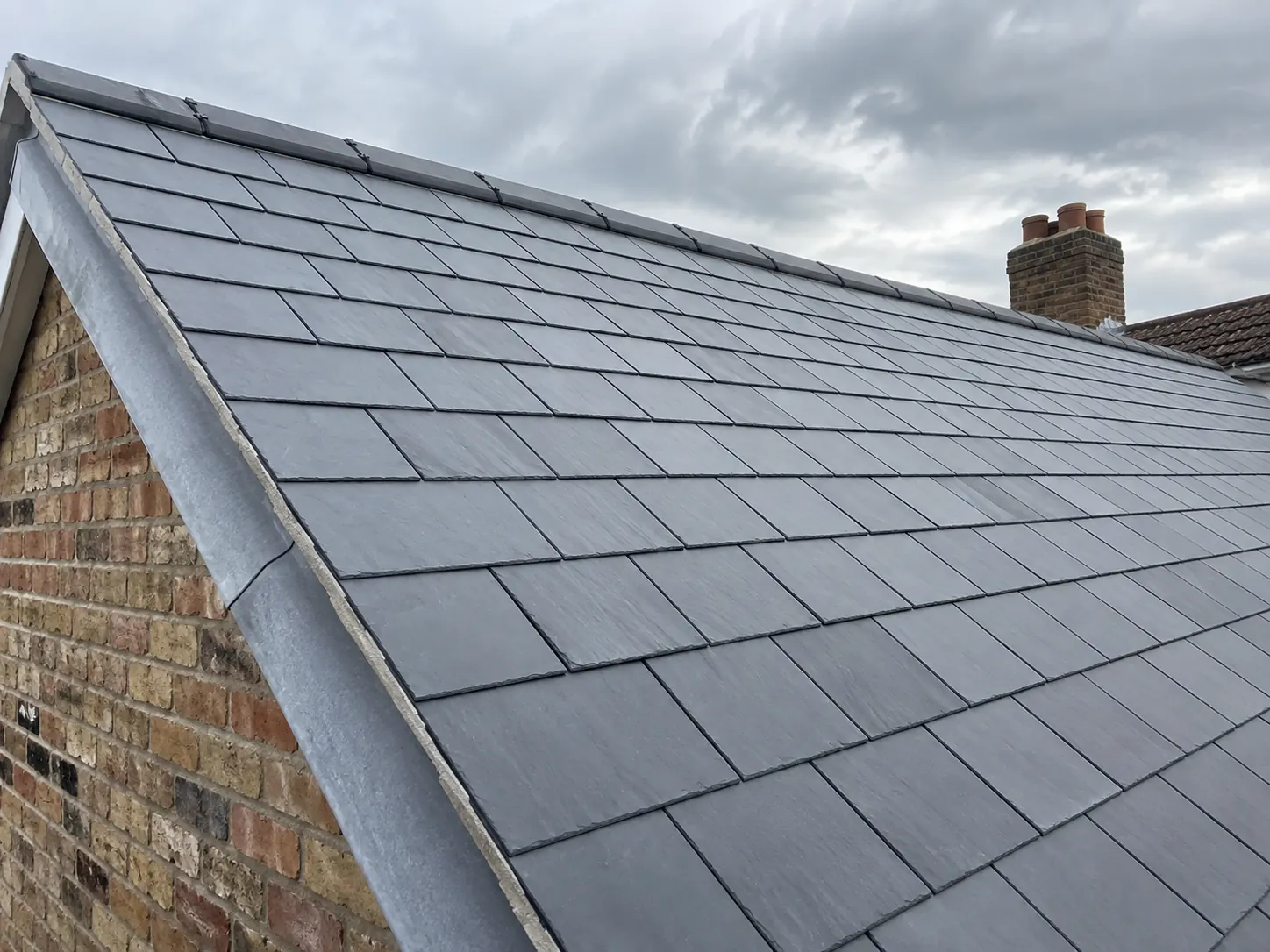
A slate roof is a covering made from thin slices of natural metamorphic rock, split by hand and fixed to a timber deck or battens. Unlike man-made tiles, natural slate has a unique texture and grain that comes from millions of years of geological pressure. It is one of the most durable roofing materials available, often outlasting the building it covers when specified and installed correctly.
In Scotland, slate roofs are a defining feature of our architecture, from urban tenements to rural cottages. The way slate is fixed—traditionally with copper or stainless steel nails—allows for a breathable, weather-tight finish that can withstand the severe wind-driven rain common in our climate.
What is slate roofing material?
Slate comes from quarries where the rock can be split into durable roofing sheets. Natural variation gives each slate its own colour and texture. Roofing slate is sourced from Wales, Spain and reclaimed Scottish stocks, with differences in thickness, grading and availability.
When we talk about slate roofing material, we are usually referring to three main sources: the historic quarries of Wales, the vast modern production in Spain, and the dwindling supply of reclaimed Scottish slate. Each has its own properties, thickness and typical lifespan.
Welsh slate: The gold standard
When comparing Welsh and Spanish slate, the thickness is often a key distinguishing factor. Welsh slates are typically split thinner because the rock is so strong, whereas Spanish slates are often slightly thicker to achieve the same level of durability. This choice affects the weight on your roof structure, although most traditional Scottish homes with sarking boards are more than capable of supporting either. Reclaimed Scottish slate, by contrast, is much heavier and requires a different approach to installation, often using larger nails and a more robust timber frame.
Welsh slate is widely regarded as the finest roofing material in the world. Quarried primarily in North Wales, it is known for its incredible durability, low water absorption and consistent quality. It is typically purple, blue, or dark grey and is usually thinner and lighter than Scottish or Spanish alternatives while remaining exceptionally strong.
While Welsh slate carries a higher initial cost than other materials, its lifespan is often measured in centuries rather than decades. For a heritage property or a forever home where long-term performance is the priority, Welsh slate remains the benchmark against which all other roofing materials are measured.
Re-slating
- Stripping and re-slating a worn roof, reusing sound slates where possible.
- A written quote once the roof and timbers have been surveyed.
Spanish slate: The modern choice
The reliability of Spanish slate comes from the rigorous testing it undergoes. In Scotland, where freeze-thaw cycles and heavy rain are common, choosing a slate with low water absorption is vital. The top-tier Spanish quarries produce material that meets the highest classifications for durability, ensuring that the cost-effectiveness of the material does not come at the expense of performance.
Spain is currently the world’s largest producer of natural slate. Modern Spanish slate, such as that produced by major brands like Cupa, offers a high-quality alternative to Welsh slate at a more accessible price point. Because of the scale of production, it is available in a wide range of sizes and grades, making it a versatile choice for both new roofs and re-slating projects.
The best grades of Spanish slate are dark grey or black and are tested to meet British and European standards for water absorption and thermal cycling. When choosing Spanish slate, the grade is critical; higher-grade slates are more consistent in thickness and flatter, which leads to a neater finish and a more reliable roof.
Scottish slate: Reclaiming history
Scottish slate production largely ceased in the mid-20th century, but the material remains a common sight on older roofs. Scottish slates are generally thicker, smaller and more irregular than Welsh or Spanish slates, often laid in diminishing courses where the largest slates are at the bottom and the smallest at the top.
Because new Scottish slate is no longer produced, repair and re-slating work usually involves sourcing reclaimed material. This is essential for maintaining the character of historic buildings or meeting strict conservation requirements in areas where a specific local look is required.
Choosing the right slate for your roof
The right choice depends on your property’s age, its location and your budget. A exposed coastal home in Fife might benefit from the weight and thickness of a heavy-grade Spanish slate or reclaimed Scottish material, while a Victorian villa might be best served by the elegance of Welsh slate.
It is also worth considering the local context. In many parts of Edinburgh and Fife, planning rules or conservation area status may dictate the type of slate you can use. We always recommend checking with local authorities if you are unsure, and we can provide guidance on which materials are likely to be acceptable and effective for your specific roof.
Want a professional to handle it?
Frequently asked questions
What is a slate roof?
A slate roof is a traditional pitched roof covering made from individual pieces of natural stone, split into thin sheets and fixed in overlapping rows to create a waterproof barrier.
What is slate roofing material?
Natural slate is a metamorphic rock formed from clay or volcanic ash. It is split along natural planes to create flat roofing tiles that are exceptionally durable and resistant to water.
Is Welsh slate better than Spanish slate?
Welsh slate is generally considered the highest quality due to its exceptional lifespan and strength, but premium Spanish slate offers excellent performance and value for money on most modern projects.
What is Scottish slate?
Scottish slate refers to material from now-closed quarries like Ballachulish. It is thicker and more irregular than other slates and is usually found as reclaimed material for heritage repairs.
How long does a natural slate roof last?
A well-installed natural slate roof can last anywhere from 60 to over many decades, with Welsh slate often lasting even longer if the fixings and timber structure remain sound.
Thinking of re-slating?
If you are considering a new slate roof, we can help you choose the right material for your property. Contact us for a detailed inspection and a quote for re-slating.
Related services
Covering Edinburgh, Perth and Dundee.