
Need this sorted?
Need help with flat roofing? Get a quote from Rowan Roofing.
What determines the life of the covering?
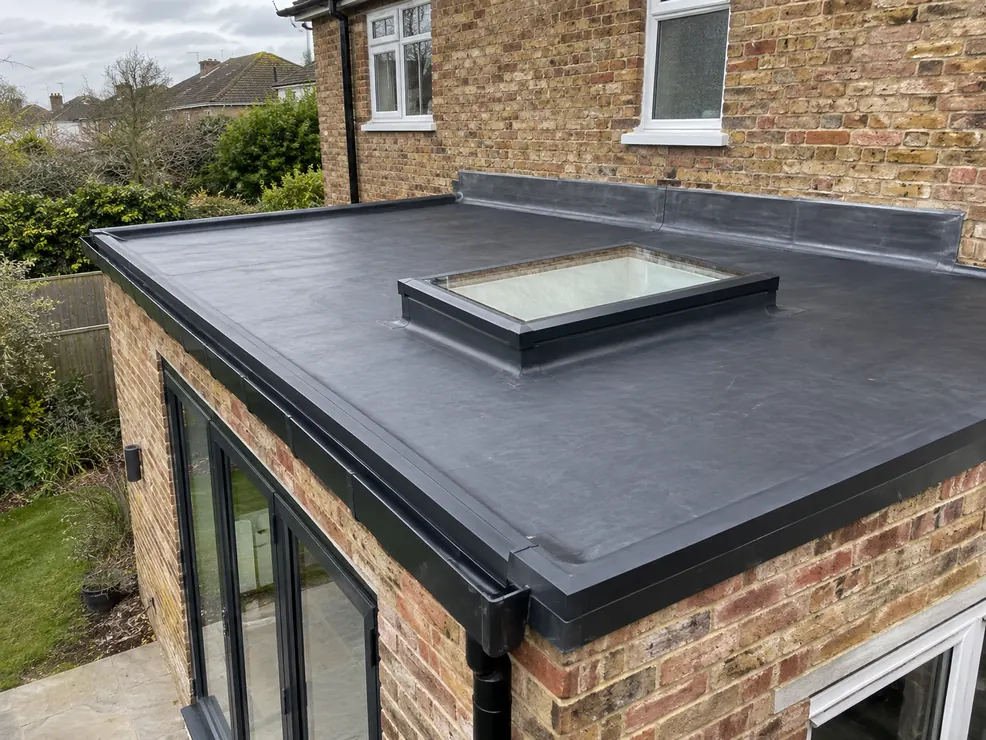
The exposed surface is only part of a flat roof. Beneath it, the deck provides support, while edges, wall junctions and outlets help keep water outside. A covering can look reasonable across its centre yet leak at a poorly sealed edge. Conversely, a small surface defect does not prove that everything underneath needs replacing. Assessment should consider the whole arrangement rather than treating the visible finish as a separate sheet.
Installation matters because joins, changes in level and penetrations must remain weather-resistant as materials move. Upkeep matters because blocked drainage can leave those details wet for longer. Previous repairs are also useful evidence: repeated patches in different places may suggest broader wear, while one lasting repair may have dealt with an isolated fault. If you know when work was done, tell the roofer, but do not assume age alone settles the decision.
Rain, frost and standing water
Wind-driven rain tests upstands and the places where a flat roof meets a wall. Rainwater can find a weak join even when the middle of the covering remains intact. After a storm, note whether water indoors appeared beside a wall, around an outlet or elsewhere. That observation helps direct an inspection without proving where the entry point is.
Flat roofs normally need a fall towards drainage. Water that remains in a hollow can reflect a restricted outlet, an uneven surface or movement in the deck. Freeze-thaw cycles can worsen existing openings when moisture enters a defect and freezes. A short-lived puddle is not the same as persistent ponding, but recurring water deserves attention. Photograph it safely from an accessible window rather than walking onto the roof to measure it.
Covering types, in general terms
Felt coverings use bituminous layers, rubber coverings use flexible membranes, and fibreglass coverings form a reinforced resin surface. These are general descriptions of common flat roof materials, not a list of systems Rowan installs. Each has different detailing requirements, and none removes the need for suitable support, sound edges and effective drainage.
You do not need to identify the material before asking for help. A photograph, any paperwork from previous work and a description of the problem are useful starting points. Avoid choosing a repair product simply because its packaging mentions flat roofs: the existing covering and the preparation required need identifying first. Mixing unsuitable materials can make a future repair harder rather than extend the roof's useful life.
Flat roofing
- Flat roofs for extensions, garages, porches and dormers.
- Attention to falls, deck boards, edge trims and upstands.
Signs that deserve a closer look
Splits, open seams, lifted perimeter details and exposed patches are reasons to arrange a check. Blisters or bubbles can indicate trapped moisture or separation within the covering, but their significance depends on whether they are intact, changing or associated with a leak. Do not puncture them to see what happens. That turns a possible concern into an opening for rain.
Inside the home, recurring damp, a musty smell or staining below the roof can point to water entry, although condensation is another possibility. A soft or visibly dipping surface raises questions about the support beneath it. Tell the roofer about changes rather than only the latest stain. Our flat roof repairs page describes the repair discussion when a specific defect can be identified.
Upkeep without climbing onto the covering
Keep an eye on visible gutter overflow, leaves near outlets and debris that has collected along an edge. Arrange safe clearance where access needs equipment; do not lean out of a window or put weight on a roof whose condition is unknown. An outlet can be obstructed even if the gutter below looks empty, so describe both what you see and how rainwater behaves.
Check accessible views after disruptive weather and whenever a new stain appears. There is no single inspection interval that suits every roof: exposure, drainage, surrounding trees and previous faults all influence the attention needed. Ask what is sensible for your roof when it is assessed. Keeping photographs and repair records helps distinguish an old mark from a developing problem without relying on memory.
When patching makes sense, and when it does not
A targeted repair may be appropriate where the defect is limited and the surrounding material and deck are sound. Replacement becomes worth discussing if joins are failing widely, the covering is breaking down across the roof or damaged support needs opening up. The question is whether the proposed work addresses the cause, not simply whether another patch can be applied.
Rowan Roofing offers flat roofing and written quotes for homeowners. Read flat roof replacement cost for the factors that shape the scope, then send details through our contact page. Describe the roof's location on the house, the visible fault and any earlier repairs so the conversation starts with your particular roof.
Want a professional to handle it?
Frequently asked questions
Does standing water shorten a flat roof's life?
It can. Standing water often points to an obstructed outlet, insufficient fall or a low spot in the supporting deck, and moisture that lingers gives defects more chances to worsen. Persistent pooling needs investigating; an inspection can distinguish a drainage problem from movement beneath the covering.
Is a blistered flat roof failing?
A blister is a reason to check the covering, not automatic proof that the whole roof has failed. Its condition, the surrounding surface and any moisture beneath it determine whether attention is needed. Leave it intact until assessed.
Can a flat roof be repaired instead of replaced?
Often a local defect can be addressed if the rest of the roof remains sound. Widespread deterioration or a damaged deck changes that decision. Ask for a written quote that explains the proposed extent of the work.
Does frost damage flat roofs?
Frost can aggravate existing defects where water gets into openings and freezes. Good drainage and intact details reduce opportunities for moisture to collect, but a roof with recurring cracks or standing water needs checking.
How often should a flat roof be checked?
The appropriate interval depends on exposure, drainage and condition. Watch for changes after storms and arrange an assessment when new symptoms appear. Ask for roof-specific upkeep advice rather than relying on a universal timetable.
Related services
Covering Edinburgh, Perth and Dundee.